Section 2
ORIGIN OF LIFE
Potential catalytic role of phyllosilicates in pre-biotic organic synthesis
(Adapted and updated from Schmitt, 2015)
The history of the pursuit of scientific understanding of the Universe and its creation, from their most extensive astrophysical nature to their smallest components is long and storied. Its heroes include Niels Bohr, Max Plank, Albert Einstein, Richard Feynman, Stephen Hawking, and many others. That history chronicles the efforts of theoretical physicists, astrophysicists and particle physicists that appear to solve mystery after mystery that have arisen with ever-advancing scientific technology, astrophysical data, and human insight. Some solutions so far have stood the test of time while others have proven to have limited applicability. Theories have become hypotheses and hypotheses have become incomplete, if not meaningless, as new data, intellects and mathematical analyses appear.
This history would indicate that complete scientific understanding may never be reached of either the remarkable order of the Universe or of the even more remarkable and precise controls over that order. Alternatively, that history would not indicate that the “physics” of scientifically and biblically documented, apparently “supernatural” events, does not exist. Scientists may be required to continue to have faith, that is, trust that such physics does, indeed, exist, whether it will ever be fully understood or not. Thus, true science and belief in a Creator become one in faith.
The seemingly infinitely complex spectrum of the Universe’s interacting matter and energy, controlled by an equally complex set of internally consistent physical (cosmological) constants, would seem to require the existence of an infinitely intelligent Creator. Within that complexity, as yet unknown physics may exist to explain the miracles, by the current definition of that word, of the Incarnation, Resurrection and Reincarnation of Jesus or, as specific examples, Transubstantiation of bread and wine in the Eucharist and imprinting of the apparent image of Jesus on the Shroud of Turin. The biblical and historical Jesus, as the son, as well as the personification of the “infinitely intelligent Creator,” certainly would have control of that unknown physics, possibly unknowable by humans, established and exercised by his Father.
Alternatively, could the Universe and its matter, energy and precise controls come into existence without infinitely intelligent intervention? Rather than the extraordinarily complex Universe and its controls being a highly unlikely phenomenon of pure chance, could there exist in space an inherent system of initially inactive physics that eventually led to the collapse of a portion of a pre-existing environment of pure energy into the “Big Bang” of Creation, resulting in our Universe, with its observed order, controls and expansion being an inevitable result. Such an alternative is difficult for this human mind to comprehend, given the obviously extreme complexity involved.
Modern physicists admit that no unified secular theory of nature has been discovered in their work and that all they have are limited hypotheses that appear to explain some of the aspects of nature’s matter and energy that can be measured. For example, early in the 20th Century, physicists and mathematicians discovered that Creation included the formation of “quanta” in the form of energetic “wave functions” thought to be the smallest possible units of energy. The minimum size of these quanta is defined by a cosmological constant derived by Max Planck. The study of quanta forms the discipline of quantum physics (quantum mechanics). Quanta wave functions are mathematical representations of the probability that a quantum object, such as a photon or electron, is at a particular location at a particular time.
One example of “unknown physics” exists in discussions related to “quantum entanglement” and possible “quantum steering” of separate quantum systems now being investigated as the basis of future ultra-high-speed computers, along with the principals of superposition and interference of quantum bits or qubits. As postulated by Albert Einstein and his colleagues in 1935, it has been shown that, no matter how far apart two previously entangled quantum systems may be, a given measurement on one system discloses the result of that same measurement on the second system or, alternatively, may “steer” the second system to have the same result from the measurement. Either possibility inherently means that communications between the two entangled quantum systems either occur far faster than the speed of light, now considered to be one of the basic cosmological constants, or that the far distant second quantum system already knows what the result of the measurement will be. The latter explanation implies the existence of “hidden physics variables” in quantum entanglement that have yet to be discovered.
In a similar way, the new technology embodied in the James Webb Space Telescope has further expanded the knowledge and mysteries of the surrounding Universe. The data from James Webb suggests to some astrophysicists that the apparent age of the Universe may be about 26 billion years rather the 13.8 billion years previous data have suggested (Gupta, 2023). Also, the hypotheses of invisible dark matter and dark energy existing within the visible Universe remain just that, hypotheses, with dark energy possibly explaining the proposed accelerating expansion of the Universe. Also, a new class of very distant and very old objects (“little red dots”) have been imaged by the James Webb and as yet only have very early, vague astrophysical hypotheses that attempt to explain them.
The Creator’s mathematical language that defines the order and controls of the Universe is being gradually and continuously deciphered by particularly insightful human beings, beginning thousands of years ago. Use of that mathematical language by humans, however, has led to increases both in understanding and in lack of understanding of Creation.
The limitations of quantum physics and measurement, the continuing uncertainty in many aspects of astrophysics, and additional unknown-unknowns in nature would suggest that eventual full secular understanding of Creation and various complex “miraculous” events is unlikely in the foreseeable future. This would leave the understanding of Creation and subsequent miracles to faith in the Creator’s infinite intelligence.
Against this background is the unanswered question (Bollore and Bonnassies, 2021) of the origin of life on Earth and possibly elsewhere, that is, we do not know the process by which the gap between inert matter and living matter was bridged. Over 4 billion years ago on Earth, organization of carbon, oxygen, nitrogen, potassium, sulfur, and phosphorous atoms and inert organic molecules produced new organic, self-replicating molecules, that is, produced life. The following synthesis of much of relevant scientific information explores the possibility that this organization was facilitated, that is, catalyzed, through interactions of water, meteor and comet impact produced rock debris, and alteration of that debris to form phyllosilicate (clay) mineral templates, most likely involving the smectite variety of phyllosiicates called “montmorillonite” (Fig. 13.66↓). These templates provided the crystallographic scaffolding that organized indigenous and introduced inert and organic chemical components into living matter, aided by the input of ubiquitous solar energy. If this indeed occurred, these interactions would be within the order and controls established at Creation.
 Fig. 13.66 SEM image of montmorillonite crystal sheets (After Arulmurugan and Venkateshwaran (2021)).
It is well established that geological as well as possible extraterrestrial processes active during the Hadean Eon on Earth (4.56-4.0 Ga) eventually led to incipient life, building on the order imposed by the fundamental particles and controls formed at Creation. “Incipient life,” as used here, means organic self-replication of information about the replicating entity. The term “organic” distinguishes incipient life from crystallographic templates of inorganic substances that also can organize and catalyze self-replication, such as, during mineral precipitation, growth and/or alteration. This definition of incipient life acknowledges that it is a necessary evolutionary stage that leads to biological life.
Biological life has been defined (Koshland, 2002) as including “programming, improvisation, compartmentalization, energy, regeneration, adaptability, and seclusion”. Within this specific definition, incipient life includes only compartmentalization, energy and regeneration, although potential mutation might be included in “improvisation.” Alternatively, biological life has been defined (Margulis et al., 2026) as requiring “processes,” including organization, metabolism, energy transformation, reaction to stimuli, signaling, self-sustaining activities, growth and reproduction of an organic system or organism. Availability and use of energy to accomplish these processes is implicit in this definition. From this second list of processes, incipient life includes only the organization, energy availability, reaction to stimuli (thermal and chemical), and self-sustaining reproduction, the latter implying adaptability, that enhances survival of the incipient life form.
As noted above, Creation of the Universe produced a seemingly infinitely complex spectrum of interacting matter and energy, controlled by an equally complex set of internally and externally consistent, precise physical rules. The order as well as flexibility imposed by these interactions and controls comprise the foundations of geology, and indeed, the foundations of observable nature in its entirety. Within the world of minerals, some phyllosilicates, that is, “clays,” illustrate the complexity, flexibility and order of nature much more than most other mineral species.
[Phyllosilicate, formerly called disilicate, a mineral compound with a structure in which silicate tetrahedrons (a central silicon atom surrounded by four oxygen atoms at the corners of a tetrahedron) are arranged in sheets. Examples are talc and mica. Three of the oxygen atoms of each tetrahedron are shared with other tetrahedrons, but no two tetrahedrons have more than one oxygen atom in common; each tetrahedron, therefore, is linked to three others. The silicon atoms are arranged at the corners of hexagons, and the unshared oxygen atoms are commonly oriented on the same side of the sheet. Because these unshared oxygen atoms are capable of forming chemical bonds with other metal atoms besides silicon, the silicate sheets are interleaved with layers of other elements [and molecules]. The various layers are stacked to form a grouping with the unshared oxygen atoms toward the centre, and these groups are weakly held together; this gives the phyllosilicates their distinct cleavage parallel to the layers. Phyllosilicates have chemical formulas that contain silicon (Si) and oxygen (O) in some multiple of Si2O5. (Britannica Editors, 2018) ]
Strong reasons exist to hypothesize that phyllosilicates played a critical catalytic role in the organic synthesis of pre-biotic and possibly early biotic compounds and structures, that is, incipient life. Phyllosilicates would be expected to be abundant at the surface of the early Earth during the water-rich Hadean Eon, and possibly during the pre-Noachian period (>4.1 Ga) on Mars, due to the hydrous alteration of impact and volcanically generated silicate rock and mineral debris. The products of this alteration, namely phyllosilicates, are demonstrably catalytic minerals (Hanczyc et al., 2003; Ferris, 2006; Schmitt, 2003, 2016) whose indigenous compositions would be exposed to a continuous input of organic compounds from both comets and chondritic meteors as well as to indigenously produced organic compounds (Ritson and Sutherland, 2023).
The explorations of the Earth, Moon and Mars permit reasonable inferences about physical conditions on the surface of the pre-biotic Earth. Also, currently available information allows the definition of necessary steps in pre-biotic synthesis in which phyllosilicates may have participated. Considerations of these steps support the plausibility that such minerals provided catalytic, substrate and organizational functions for pre-biotic and possibly early biotic development of organic structures, leading to formation and replication of RNA (ribonucleic acid), the single strand cousin to the double strand DNA (deoxyribonucleic acid), and, in turn, leading to a pre-biotic RNA world. Ultimately, prokaryote cells may owe some of their characteristics and functions to the inherent and varied structural and “evolutionary” characteristics of phyllosilicates.
Discoveries over the last half-century strongly support hypotheses (Ferris et al., 1996; Hanczyc et al., 2003; Schmitt, 2003) that phyllosilicates played a critical catalytic role in the development of replicating incipient life forms. These discoveries include the following:
-
- Impact pulverization and partial vitrification of greater than 4.3 Ga lunar surface silicates (Shoemaker et al., 1967; Wilhelms, 1987; Meyer, 2012), indicating that similar impact effects occurred on the early Earth,
- Eruptions of basaltic lava and ash on the Moon before 4.2 Ga (Wilhelms, 1987),
- Indigenous water in primordial lunar materials (Hauri et al., 2011),
- The presence of terrestrial water in 4.4 Ga terrestrial zircons (Wilde et al., 2001),
- The presence of relevant organic molecules in carbonaceous chondrites and comets (Munch et al., 1976; Carr, 1996; Stevenson, 2001; Abramov and Mojzsis, 2009; Westall, 2009),
- Identification of phyllosilicates in the oldest Martian terrains (Klidaras et al., 2025; Appendix A: Martian Phyllosilicates; references listed in appendices include those from the original GSA paper in Schmitt (2015)). The local presence of chlorates (Hecht et al., 2009; Clegg et al., 2013; Wang and Fernandez, 2025) during weathering may have facilitated phyllosilicate formation but would probably contribute to the destruction of organics (Rzymski et al., 2024). Martian natrolite (zeolite) (Sarkar et al., 2024) also locally may catalyze UV disassociation of organics (Fornaro et al., 2018).
- The Mars Curiosity mission SAM (Sample Analysis at Mars) has detected a variety of indigenous aromatic and aliphatic (open carbon chains) organic molecules with organic carbon isotopic signatures in a range of sediment types at Gale Crater (Stern et al., 2023) as well as identifying several high molecular weight organic molecules (Chou et al., 2023).
- Demonstration of affinities of organic molecules for phyllosilicate crystal structures (Ferris, 2006) .
- Diamond-graphite inclusions in zircons with ages up to 4.252 Ga have isotopically light carbon (Nemchin et al., 2008).
More recent direct explorations of the Martian surface by the Perseverance rover have verified the presence of phyllosilicates in various layered sedimentary bedrock exposures (Bishop and Lane, 2025). In fact, organic carbon concentrations (Stern et al., 2022) and macromolecular carbons (MMC) (Murphy et al., 2025) have been detected, respectively, in mudstones at Gale and Jezero Craters.
Phyllosilicates may have provided both the templates and the catalytic substrates for organizing and combining various chemical elements and organic molecules then available in the uppermost crust of the early Earth and its atmosphere, as suggested in very general conceptual terms by Cronin and Walker (2016). Phyllosilicates potentially provide Cronin and Walker’s “nonliving network” that continuously adjusts and replicates itself in response to a changing chemical, aqueous and thermal environment.
With respect to other members of the phyllosilicate family of minerals besides clays, it should be noted that Hansma (2009–2017) has proposed the layered, potassium-rich, silicate muscovite (mica) as a possible host for pre-biotic synthesis. Although micas are phyllosilicates, muscovite is less environmentally flexible than other phyllosilicates; however, its alteration products include smectites, and altered muscovite might provide a ready, if lowered source of potassium.
Analyses of images, data and samples from the Moon (Wilhelms, 1987; Schmitt, 2003; Hiesinger and Head, 2006; Neal et al., 2023) and data and meteorites from Mars, provide an initial foundation for understanding the environment in which incipient life evolved on Earth and potentially on Mars. Although more geological background from the Moon and Mars will be highly enlightening, past exploration and analyses nonetheless tell us a great deal about the pre-biotic environment of these terrestrial planets.
Oxygen isotopic ratios from 4.4 Ga terrestrial zircons (zirconium silicate) (Wilde et al., 2001), indigenous water in olivine from lunar volcanic ash (Hauri et al., 2011), and the geomorphology of ancient terrains on Mars strongly indicate that pre-biotic molecular precursors to life on Earth formed in a water-rich environment and, in the absence of atmospheric oxygen, a reducing one as well. Whether this environment was confined to oceanic or near oceanic environments is not yet clear, but there is evidence from Jack Hill’s zircons for fresh water being associated with land surfaces at 4.0 Ga or earlier (Gamaleldien et al., 2024). Other Jack Hill’s zircons indicate that land areas likely would have been exposed as early as 4.4 Ga (Wilde et al., 2001) to rainfall derived from ocean water evaporation.
By extrapolation, the cratering and eruptive history of the Moon and Mars (Wilhelms, 1987; Schmitt, 2003; Hiesinger and Head, 2006; Osinski et al., 2023) indicate that the early Earth’s environment also had an abundance of added thermal, solar and mechanical energy (Ferus et al., 2015). From 4.6 to 3.7 billion years ago, a very high frequency of highly energetic impacts of objects from space created a mega-regolith of broken and partially vitrified silicate rocks. This fact has been verified, geophysically and photographically for the Moon. During this period, impacts resulted in the Moon’s crust becoming saturated with craters 60-70 km in diameter (Wilhelms, 1987) and the lunar mega-regolith became 10s of kilometers deep, now variable in thickness due to very large impact basin formation. Impacting objects from space ranged in size from submicron dust (Fig. 13.67A,B↓) to planetesimals capable of creating continental scale impact basins, such as South Pole-Aitken and Procellarum Basins (Fig. 13.68↓) and the Northern Lowlands and Hellas Basins on Mars. The compositions of impacting space materials spanned the range from carbonaceous chondrites to various other chondrites to iron-rich meteors to long and short period comets, based on a long history of meteorite research, observations of bodies in the Solar System, and recent investigations of asteroids and comets by spacecraft.

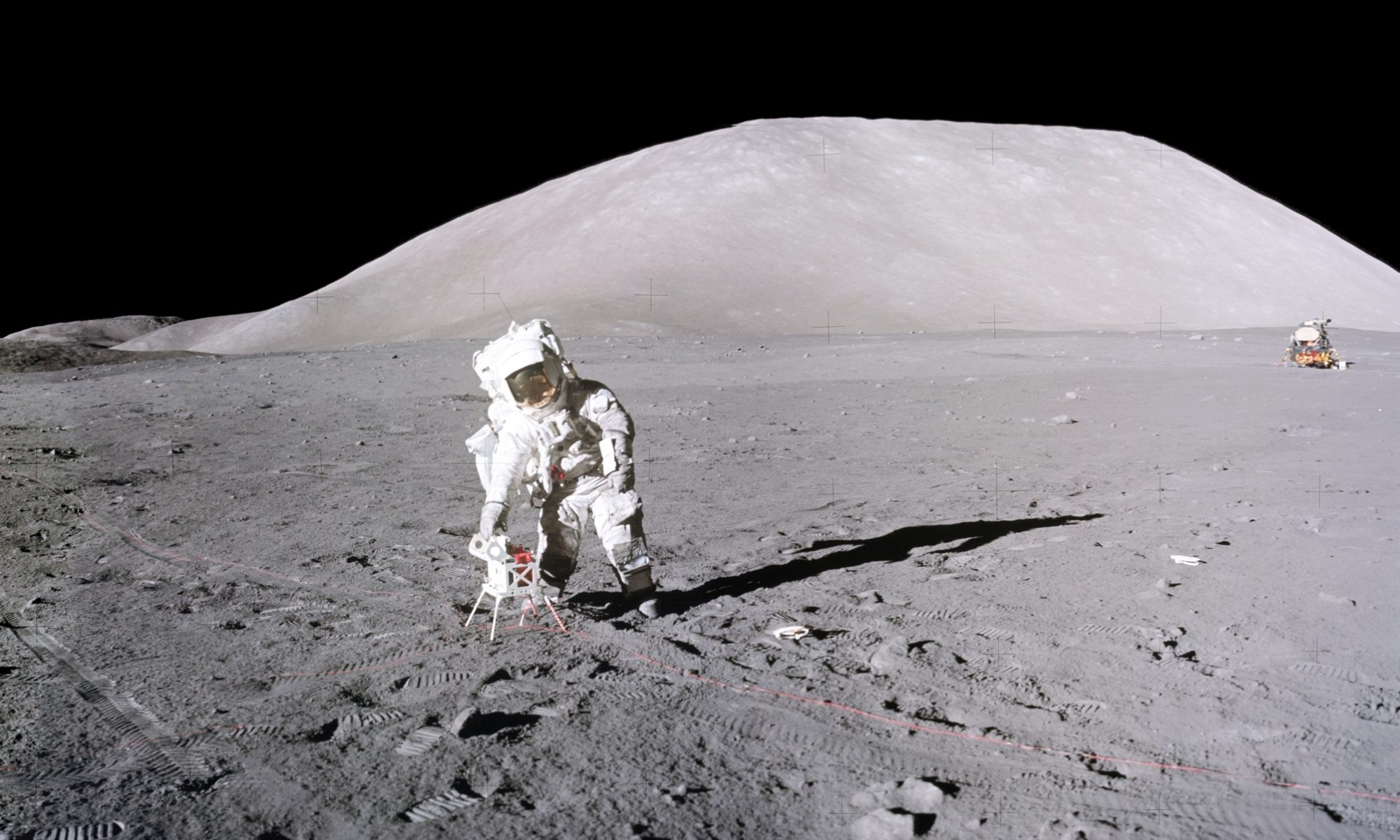
 Fig. 13.67A,B. Views of (A) impact cratered and gardened lunar far side upper crust overlying the Moon’s mega-regolith and (B) in situ lunar surface regolith examined by the author at the Apollo 17 landing site in Taurus-Littrow. (NASA Photos AS17-150-22951 and AS17-140-22354, respectively).
 Fig. 13.68. View of the near side of the Moon showing three major impact basins over 1000 km in diameter. A far side large basin, South Pole Aitken, is about 2500 km in diameter and the probable near side mega-basin, Procellarum, is about 3200 km in diameter. (NASA composite photo of Lunar Reconnaissance Orbiter images.)
Zircons have been found that crystallized on Earth between 4.4 and 3.9 Ga (Watson and Harrison, 2005; Harrison, 2009; Mojzsis, 2010) that indicate magmatic activity and fractional differentiation of magmas occurred early in Earth history and likely simultaneously with the formation of the Earth’s mega-regolith. These internally generated as well as impact-induced magmas added water, volatile compounds, and highly varied silicate mineral assemblages to the surface environment of the Hadean Eon.
As a consequence of such a range of impact and volcanic activity in a water-rich geological system, rapid hydrous alteration of rocks and minerals would have occurred. This pervasive alteration of both magnesium and iron-rich (mafic) and aluminum and silicon-rich (alumina-silicate) minerals would have produced many types and compositional varieties of phyllosilicates that are common in water- and silicate-rich environments, today. Indeed, it is probable that the dominant mineral species at the Earth’s surface during the Hadean Eon consisted of phyllosilicates, and specifically the chemically complex, environmentally and compositionally adaptable family of smectites. Research on the formation of such minerals during weathering and during low to moderate temperature hydrothermal activity strongly supports this conclusion (Kerr, 1955; Robertson, 1955; Inoue, 1995).
Water transport would have concentrated phyllosilicates and associated alteration products in Hadean lakes and seas. Closed impact basins contained many such bodies of water, resulting in a wide variety of chemical niches hosting these materials. These phyllosilicate-rich locales probably would have been wet, salty, reducing (oxygen-poor), chemically complex and variable from basin to basin (Fegley and Schaefer, 2012). They also would have been highly varied in their temperature and pressure regimes, favoring rapid crystallographic adaptation by different phyllosilicate compositions and structures. Crystallographic growth and adaptation might be considered a form of inorganic evolution or inorganic life. Incorporation of organic compounds within their adaptable sheet structures may have assisted in this inorganic evolution and stabilization of various varieties of phyllosilicates in changing and dynamic environments. The remote identification of extensive phyllosilicate deposits in ancient Martian terrain appears to confirm the early presence of these materials on water-rich terrestrial-class planets.
Many significant implications for pre-biotic history on Earth and Mars arise from the reasonably understood history of the Moon (Wilhelms, 1987; Neal et al., 2023). The Moon, Mars and Mercury provide a record of the impact history of the inner solar system and therefore a record of that history on Earth (Taylor, 1982; Carlson and Lugmair, 2000). Although still subject to much debate (Fig. 13.69↓), the Moon probably began its existence about 4.57 billion years ago (Patterson, 1956) either as a small planet of chondritic composition orbiting the Sun near or around the Earth (Alfven and Arrhenius, 1972; Schmitt, 2003), or as a consequence of the impact of a Mars-sized asteroid on the Earth (Taylor, 1982; Spudis et al., 2011; Taylor and Esat, 1996; Canup and Righter, 2000; Jones and Palme, 2000). At least the outer 500 km of the Moon consisted of a magma ocean (Wood et al., 1970; Smith et al., 1970; Appendix B: Lunar Magma Ocean), probably generated by energy released by accretionary impactors (Schmitt, 2003), as seismic and isotopic data indicate that magma developed on a cool, chondritic proto-mantle (Section 1, §10.5).
 Fig. 13.69 Graphical representation of the two competing hypotheses for the origin of the Moon, that is, (A) capture of an independently accreted Moon-sized planetesimal and (B) impact of a Mars-sized planetesimal with the early Earth. Also represented are the post-lunar origin large impacts that occurred on the Moon and, by extension on the Earth, prior to about 3.7 Ga (Estimated age of the Orientale Basin).
The sequential crystallization of silicate minerals from the lunar magma ocean produced a Ca-plagioclase (anorthite) dominated crust, that includes a small proportion of iron-rich accessory minerals, and which currently ranges between 34-43 km thick (Wieczorek et al., 2013), except for the two extremes noted below. As this crust became coherent enough to record continuing impacts, it has become saturated with impact craters up to 60-70 km in diameter (Wilhelms, 1987) with the development of a deep mega-regolith. In this same period of saturation cratering, very large impacts occurred that created a crust that varies in current thickness from <20 km in the Procellarum basin to 100 km between that basin and the South Pole-Aiken basin. These very large basins are of continental scale ranging from about 1000 to 3200 km in diameter, with the largest hypothesized as being the ~4.35 Ga Procellarum Basin. The age of Procellarum is based on Mg-suite age dates reported by Borg et al. (2015). The Procellarum impact was followed by the ~4.20 Ga (Schmitt, 2014, 2016) South Pole-Aitken Basin formation at ~2500 km in diameter and the Crisium (~3.9 Ga) and Imbrium (~3.8 Ga) Basins at ~1000 km in diameter (Wilhelms, 1987; Stöffler et al., 2006; Schmitt et al., 2017). The origin of the Procellarum Basin by a very large impact is controversial; however, a prolonged period of large basin formation appears more likely than a short-lived lunar cataclysm (Zellner, 2017) with the Procellarum impact occurring before complete solidification of the magma ocean (Schmitt, 2016; Section 1, §28.0).
From about 4.5 to 3.7 billion years ago, therefore, the upper 25 km or more of the Moon’s crust consisted of a continuously re-formed calcium-aluminum silicate debris layer comprised of crushed rock fragments within an extensive matrix of much smaller mineral and glass particles (Shoemaker et al., 1967; Wilhelms, 1987; Meyer, 2012; Schmerr and Han, 2014). The geological consequences of the same violent impact history on Earth would be profound but with the additional effects produced by having significant amounts of indigenous water in its crust and at its surface. The same also can be said of early Mars (Carr, 1996; Squyres et al., 2012; Appendix C: Early Martian Crust).
On Earth and Mars, fine crustal impact debris and volcanic materials, with the availability of water, would alter rapidly to hydroxyl and cation-rich phyllosilicates (Table 13.39) as that debris formed. Alterations of silicate minerals and glasses to phyllosilicates constitute well-documented geological phenomena at the Earth’s surface and in its subsurface.

Such alteration also occurs in hot water (hydrothermal) environments associated with volcanic eruptions (Velde and Meunier, 2010). Silicates like feldspars (rich in alkali elements) and olivines and pyroxenes (rich in magnesium and iron) are particularly susceptible to such alteration. Of particular interest in this regard are phyllosilicates of the smectite group and, to a lesser extent, serpentine. Smectites (Meunier, 1965; Brindley and Brown, 1982; Bergaya et al., 2006), are composed of two-dimensional sheets of SiO4 tetrahedrons with the composition Si2O5 (Fig. 13.69↑). Each tetrahedron shares three corners with other tetrahedra, resulting in an overall hexagonal mesh. Aluminum and ferric iron can substitute for silicon at the center of each tetrahedron with the ensuing charge imbalance satisfied by various cations positioned between sheets (Table 13.39↑). The resulting complex interlayered structures and geochemistry (Sposito et al., 1999) of these minerals may offer significant potential for selective, pre-biotic organization of organic molecules (Ertem and Ferris, 1996; Schmitt, 2003; Ferris, 2006; Osinski, 2011). It may be of significance that the hydrophobic properties of water at the molecular interfaces in the smectite group of phyllosilicates are more ordered (tetrahedral organization with stronger hydrogen bonds) than in bulk water more than 1 micron distant (Davis et al., 2012) that, in turn, may increase phyllosilicate’s affinity for organic compounds.
 Fig. 13.70. Phyllosilicate Crystal Structure; Upper figure: Phyllosilicate Crystal Structure. Schematic presentation of (A) an idealized hexagonal tetrahedral sheet and (B) a contracted sheet of ditrigonal symmetry owing to the reduction of mesh size of the tetrahedral sheet by rotation of the tetrahedrons. Lower figure: Schematic presentation of (A) 1:1-layer structures and (B) 2:1-layer structures. (Grim, 1968). (Illustrations from Encyclopaedia Brittanica, Inc., 1994, 1998, respectively).
The remote identification of various phyllosilicates in the oldest surface regions on Mars (Mustard and Wiseman, 2014; Appendix D: Martian Phyllosilicate Distribution) provides strong clues as to those varieties that may have been present at the surface of the early Earth. To date, most Martian phyllosilicates are associated with terrains when surface water appears to have been abundant (Carr, 1996). Cannon et al. (2017) have proposed that these Martian phyllosilicates may have formed soon after crystallization of the planet’s magma ocean when mineral alteration was accelerated by a hot, high-pressure atmosphere with both water and CO2 as supercritical fluids. This environmental extreme may not have been necessary, as alteration of silicates to phyllosilicates happens at a geologically rapid pace under normal as well as hydrothermal conditions.
Isotopically anomalous oxygen and silicon in quartz (Malarewicz et al., 2025) in Martian meteorite NWA 7533 (Malarewicz et al., 2025), spatially associated with breccia clast zircons dated at 4.31-4.48 Ga, is suggested by Malarewicz et al. to be the result of magma interaction with “clay” formed by previous alteration in a water-rich environment. This interaction may have occurred as magmas encountered “Sub-cryospheric, long duration (over 4 billion years), warm subsurface groundwater systems” (Head et al., 2026), relatively isolated from the intense impact environment at and near the Martian surface. Head et al. further suggest that these systems created a “deep biosphere” unlike that which appears to have developed at the surface of a more massive, water-rich Earth.
The Martian phyllosilicates appear to be rich in Fe, Mg and Al, specifically including members of the smectite group, with saponite, nontronite, vermiculite, and montmorillonite as the most common examples identified. Spectral signatures of illite (or possibly muscovite) and chlorite (or clinochlore) also have been detected. Varieties of serpentine could explain some other, more local signatures (Amador et al., 2014). Hydrated silica, allophane and sorosilicate pumpellyites, with a broad range of compositions, also have been identified. At one specific location, an iron-magnesium smectite appears to be dominant and is overlain by hydrated silica, montmorillonite, and kaolinite (Bishop et al., 2008). Mars Exploration Rovers also discovered opaline silica at Gusev Crater and possibly at Meridiani Planum (Squyres et al., 2008). The Curiosity lander at Gale Crater recently identified trioctahedral smectite in a closely examined mudstone (Vaniman et al., 2014). Although the hostile surface environment of Mars (short wavelength UV) may rapidly degrade exposed organic compounds, the Sample Analysis at Mars (SAM) instrument on the Curiosity rover has detected thiophenic (C4H4S), aromatic and aliphatic compounds (Eigenbrode et al., 2018).
The presence of dissolved water in impact melt sheets produced by very large impacts would make such sheets greater in volume (lower density), larger in area, and lower in temperature than impact-derived melt sheets observed on the Moon (McCauley, 1987). Fractional crystallization (differentiation) of terrestrial melt sheets potentially would produce the silica- and alkali-rich foundations for the first continents (Schmitt, 2003, 2006; Grieve et al., 2006). Evidence of the existence of differentiated terrestrial melt sheets exists in the discovery of ancient igneous zircons in very old sedimentary rocks of the Australian, Canadian, and African continental cores (shields) (Wilde et al., 2001; Appendix E: Earth’s Ancient Zircons). Zircon crystals form late in the crystallization of water-rich silicate melts (Valley, 2003; Watson et al., 2006), as the concentration of trace amounts of zirconium attains levels sufficient to trigger zircon’s crystallization.
Zircons resist abrasion better than any other minerals other than diamond and survive multiple periods of erosion, deposition, metamorphism, later erosion, and eventual re-deposition in younger sedimentary rocks. So far, the oldest crystallization date for a terrestrial zircon is 4.4 Ga (Harrison et al., 2008), and isotopic investigation has confirmed the presence of water at the time of its crystallization (Valley et al., 2005). This date is close to an estimated 4.35 Ga for the formation of the largest probable lunar impact basin, Procellarum (Schmitt, 2016). The ages of younger but still ancient sedimentary zircons fall into the period of lunar large basin formation down to the end of that period at about 3.7 billion years ago (Wilhelms, 1987; Schmitt, 2017).
Diamond-graphite inclusions in zircons with ages up to 4.252 Ga from the Jack Hills meta-sediments of Western Australia have isotopically light carbon that suggests biogenic activity prior to that time although inorganic explanations are possible (Nemchin et al., 2008). Isotopically light carbon from 3.7 Ga graphite inclusions in apatite found on the island of Akilia in Greenland, however, is reported to be the possible result of inorganic chemical reactions (Horita, 2005; Fedo et al., 2006). On the other hand, the Jack Hills diamond inclusions in zircon might be associated with large impacts discussed above and conceivably might have sampled early biogenic carbon present in the target crustal rocks. If so, it would indicate biotic activity significantly prior to 4.2 Ga. This possibility that the Earth’s surface was compatible with life, in spite of continued impacts of objects from space, will be considered further, below.
The gap between pre-biotic synthesis and fossil evidence of life forms is significant. Pre-Cambrian rocks in Greenland (Nutman et al., 2016) indicate the existence of advanced life forms but none appear older than about 4.2 Ga.
In addition to solar irradiance and greenhouse trapping of solar heat by the young Earth’s atmosphere, a high frequency of impacts of meteoritic material from asteroids and comets provided a continuous source of thermal and mechanical stirring energy to the surface environment. This energy input would accelerate clay formation and various aqueous chemical reactions. Also, the “stirring” effect of impacts would accelerate and stimulate chemical reactions, as would lightning within impact or volcanically generated atmospheric dust clouds.
Large impacts before 3.7 Ga might have temporarily interrupted any niche progress toward complex, self-replicating macro-molecules but would not have affected the overall accumulation of globally distributed pre-biotic organic complexes. Recent analysis even suggests that complete, large impact sterilization of the Earth may not have occurred after the main accretionary phase of its history was complete about 4.5 billion years ago (Abramov and Mojzsis, 2009). The probable end of the disruptive aspects of large impacts at about 3.7 Ga, however, may be indicated on Earth by generally accepted evidence of the presence of replicating life dated at about 3.5-3.4 billion years ago (Cady, 2009) and with some isotopic evidence of complex life processes taking place around a disputed figure of 3.8 billion years ago (Mojzsis et al., 1996) This evidence exists in addition to that of light carbon isotopes in ancient zircons discussed previously.
The large, isolated basins enclosing melt sheets also may have created bounded lakes into which erosion could concentrate phyllosilicate-rich sediments and relevant elemental and molecular components. Any early beginnings of plate tectonics and related processes (Witze, 2006) would have accelerated erosion as internal convection forces in the Earth’s mantle interacted with solidified, relatively low-density melt-sheet cores resting on the higher density mantle.
It should be noted that evidence exists for “fossilized microorganisms” in the precipitates around hydrothermal vents in ferruginous sedimentary rocks that are as old as 3.77 Ga and possibly 4.28 Ga (Dodd et al., 2017). Further, the discovery of vents dominated by the phyllosilicate, talc (Mg3Si4O10(OH)2) in ocean floor environments, (Hodgkinson et al., 2015) hints that other phyllosilicates favorable to pre-biotic synthesis may exist or have existed.
The makeup of the atmosphere of the early Earth is suggested by review and synthesis of published data and analyses related to pre-biotic exposed mineral characteristics, geodynamics, chemical environments, and rates of mineral and glass alteration at and near the surface. Water (H2O), carbon monoxide (CO), carbon dioxide (CO2), methane (CH4), nitrogen (N2), hydrogen (H2), ammonia (NH3), and fractal organic hazes have been proposed as important contributors to this early atmosphere (Wolf and Toon, 2010; Fegley and Schaefer, 2012; Appendix F: Earth’s Early Atmosphere) The proportions of these components, however, and their interactions with the water-rich surface environment remain controversial. Traditionally, carbon dioxide has been considered the dominant early atmospheric gas. Geochemical arguments related to the existence of magnetite in 3.8-3.65 billion-year old banded iron formations appear to limit atmospheric carbon dioxide concentrations during that period to no greater than about 1200 ppm, versus ~250-400 ppm over the last century (Rosing et al., 2010); however, given the apparent absence of older banded iron formations, this constraint may not apply to the very earliest Earth atmosphere in the context of this discussion.
At, above and, indirectly, immediately below the Earth’s surface during the Hadean, solar irradiance probably amounted to about 70% of that today (Kasting, 2010). For liquid water to be sustained, however, the atmosphere clearly provided a greenhouse blanket of nitrogen, containing modest amounts of carbon dioxide, methane, and water (Sagan and Chyba, 1997; Goldblatt et al., 2009; Chyba, 2010; Wolf and Toon, 2010) and probably hydrogen and a haze of hydrocarbons. H2-N2 collision-induced energy absorption also may have been a major contributor to greenhouse warming (Wordsworth and Perrehumbert, 2013). Actual proportions and quantities of various gases remain subject to debate. Recently, isotopic data from 3.0-3.5 Ga fluid inclusions in quartz have indicated that nitrogen pressure may have been as low as 0.5 bar and carbon dioxide pressure lower than 0.7 bar (Marty et al., 2013). On the other hand, these deductions may have little bearing on a billion-year older Hadean atmosphere.
The net greenhouse heating effects of the various components in the Hadean atmosphere may have been augmented and possibly superseded by the reduction in heat-loss due to a generally lower atmospheric albedo as a consequence of fewer cloud-forming aerosols and less continental area (Rosing et al., 2010). On the other hand, a less active Sun probably included a reduced solar magnetic field strength and a commensurately increased terrestrial cosmic ray flux, contributing to increased cloud formation (Carslaw, 2009; Appendix G: Atmosphere and Cosmic Ray Flux references). Further, as discussed above, continued late accretionary material from space would have contributed additional heat to the Earth’s atmosphere and surface.
Ammonia (NH3) likely resided in early terrestrial atmospheres, being produced by reactions involving the temporary high-temperature and high-pressure shock regimes accompanying impacts as well as by lightning in the nitrogen and hydrogen-rich atmosphere (Nakazawa et al., 2005). Ammonia production in this way could be viewed as a natural Haber-Bosch process (Smil, 2001), possibly including impact plasma-generated nickel-iron metal (Taylor et al., 2001) as a catalyst. Pre-biotic production of ammonia from nitrogen and water also has been proposed as taking place on surfaces of iron sulfide crystals (pyrite), where iron served as a reducing agent (Summers and Chang, 1993; Brandes et al., 1998; Dörr et al., 2003). Even if hydrogen were escaping from the Earth on a continuous basis (DeWitt et al., 2009), low-density, gaseous ammonia, tending to concentrate in the upper atmosphere, may have been protected from ultraviolet decomposition by a “fractal organic haze” (Wolf and Toon, 2010). In this case, “fractal” refers to a size spectrum of very small organic particles in which the same general but highly irregular shape is characteristic of each particle.
Deciphering the reduction-oxidation (redox) state of the early Earth atmosphere will be important in constraining atmospheric composition and interaction with the surface environment. Recent studies of zircon inclusions indicate that as early as 4.4 billion years ago, oxygen fugacity in the magmas that crystallized the zircons were the same as in the present-day mantle of the Earth (Trail et al., 2011). If so, the dominant gaseous species in an atmosphere influenced largely by volcanic gases would be N2, H2O, CO2, SO2, and HCl (Frost and McCammon, 2008), although laboratory experiments at high temperatures and pressures suggest that ammonia and formate (HCOO–) also may be produced hydrothermally (Brandes, et al., 1998; McCollom and Seewald, 2001). It may be, however, that the earliest zircon crystallization was in late magma differentiation in large impact-generated magma “lakes” and thus not necessarily in equilibrium with the Earth’s mantle. To further complicate considerations of the ancient atmosphere, or possibly simplify them, Sutherland and his team (Ritson and Sutherland, 2023) suggest that HCN was a critical component, as will be discussed subsequently.
A reducing surface environment may have been provided by the slow escape of hydrogen from the Earth’s interior. One suggestion has been that the atmosphere contained up to 30% hydrogen gas (Tian et al., 2005). A steady state source of atmospheric hydrogen might have been provided through its continued out-gassing from the crystallizing magma ocean due to the disassociation of water reacting with disseminated and immiscible iron-rich liquid. Residual hydrogen out-gassing from the mantle probably would have continued for several hundred million years. Either way, the atmosphere and oceans may have been kept in a reduced state for the period necessary for pre-biotic genesis of organic macromolecules. Alternatively, the catalytic properties of phyllosilicates may have played a compensating, oxidation-inhibiting role in an otherwise neutral or oxidizing environment.
5.0 Earth’s Surface Temperature
There is a general consensus that the Sun’s energy output was about 25% less than today during the first two billion years of Earth history (Feulner, 2012). Unless there were means of heating the atmosphere during that time, the Earth’s surface and any surficial water would have been frozen and phyllosilicate formation and organic reactions would have been extremely slow or not at all. As geological evidence from the oldest rocks and zircons strongly indicate that liquid water existed on the early Earth (Wilde et al., 2001), the cooling effect of a “faint Sun” was countered during this period. As discussed above relative to Mars, this cooling effect of a faint Sun would be countered by the thermal releases from crystallization of the Earth’s magma ocean, pre- and post-crystallization eruptive and impact processes, and radioisotopic decay-driven remelting of the mantle and resulting magmatic heat transfer to the surface. In addition, telescopic studies of young, Sun-like stars indicates that they are prone to a high frequency of large solar flares (Ariapetian et al., 2016; Deatrick, 2016) which would not only transfer energy into the Earth’s atmosphere but would contribute to the breakdown of the likely dominant CO2, H2O, N2, NH3 and CH4 in this young atmosphere. The combination of various breakdown products potentially would increase the abundance of other greenhouse gases such as HCN and N2O.
An evaluation of the potential greenhouse warming effect of H2 and N2 has been conducted by Wordsworth and Pierrehumbert (2013). They conclude that, with 2-3 times the present N2 in the atmosphere, and a N2/H2 mixing ratio of 0.1, surface temperatures could be raised between 0 and 75 degrees with CO2 levels 2-23 times the present amount. These relatively imprecise results, as well as others given above, are generally consistent with the geological evidence that liquid water was present at the Earth’s surface during the Hadean Eon’s origin of life.
Early aggregation of iron-rich liquid from the Earth’s magma ocean and its migration to form a core, as well as possible additional core contributions from late giant impacts (Canup and Righter, 2000; Yu and Jacobsen, 2011), suggests the potential of a pre-biotic, core dynamo-generated magnetic field that was of sufficient strength to protect most of the atmosphere and terrestrial water from solar particle erosion (Stevenson, 2008; Appendix G: Atmosphere and Cosmic Ray Flux). Such a field appears to have been present at least by 3.4 billion years ago (Tarduno et al., 2010); however, for complex, replicating life to have existed at ~3.5 billion years, if not before (Westall, 2009; Abramov and Mojzsis, 2009), the probability is high that the Earth’s magnetic field originated much earlier than 3.5 Ga. In fact, strong evidence exists that the lunar magnetic dynamo field existed on that much smaller body by 4.25 Ga (Tikoo et al., 2017).
The demise of a planetary magnetic field early in Martian history (Stevenson, 2001) would have exposed the Martian atmosphere and surface to energetic solar protons and electrons and stopped direct surface evolution of organic molecules. Biotic activity, if already initiated on Mars, may have continued in the subsurface, particularly at the geologically persistent hydrosphere-cryosphere interface (Munch et al., 1976; Carr, 1996).
7.0 Phyllosilicates’ Potential Pre-Biotic Role
The availability of a broad spectrum of possible phyllosilicate mineral catalysts and structural templates for the organization and self-assembly (Ferris, 2006; Wasio et al., 2014; Appendix H: Phyllosilicates’ Pre-Biotic Role) of pre-biotic molecules may have provided critical steps along the path to self-replicating macromolecules. The potential also existed for these molecules to enhance the stability of their inorganic hosts in various pre-biotic environments. Fig. 13.71 illustrates, schematically, the potential path that may have been part of this process of pre-biotic and possibly early biotic organic synthesis.
 Fig. 13.71 Potential path of the process of pre-biotic and possibly early biotic organic synthesis. ATP is adenosine triphosphate, the dominant source of metabolic energy in all modern life forms (see Martin et al., 2014), as well as maintaining protein solubility (Patel et al., 2017). (After Schmitt, 2015).
Internal phyllosilicate interlayered surfaces also may have been the initial structural frameworks that organized amino acid formation from amine (–NH2) and carboxylic acid (–COOH) (Lackinger and Heckl, 2009; Heininger et al., 2009). In addition, these minerals provided the fixed availability of necessary inorganic components, such as phosphorous-oxygen groups. Further, otherwise unstable RNA strands (Attwater et al., 2025) may have been stabilized by the scaffolding provided by phyllosilicate structures, becoming, in a sense, the first “cells.” These RNA cells later to be replaced by more evolutionarily advantageous organic systems (Ertem and Ferris, 1996, 1997). For example, phyllosilicate scaffolds may have anticipated a RNA function in providing spatial organization for cellular metabolism, specifically offering protein attachment sites for hydrogen production (Delebecque et al., 2011). Similarly, crystallographic mobility of sodium ions in phyllosilicates may have anticipated the sodium channels in cell membranes that trigger bioelectrical events within cells (Payandeh et al., 2011).
Further, the continued nucleation and crystal growth of phyllosilicates within the same geochemical and thermal environment, that is, “rock and mineral alteration,” would multiply these pre-biotic cells. As changes in the geochemical and thermal environment occurred, the cells would evolve, and the phyllosilicate “species” would survive. Recent work by Becker et al. (2019) indicates that wet-dry cycling provides a mechanism for the synthesis of RNA nucleosides from purine and pyrimidine in combination with ribose sugar. Phyllosilicates routinely survive such natural wet-dry cycles and may provide a mineral crucible in which this synthesis can take place (see Lahav et al., 1978; Hansma, 2009, 2010, 2013, 2014, 2017). Becker et al.’s work follows on earlier experiments that combined formamidopyrimidines (formic acid plus aminopyrimidines) with sugars to produce high yields of purine nucleosides (Becker et al., 2016).
8.0 Genesis of The First Pre-Biotic Macromolecules
8.1 Indigenous Pre-Biotic Chemicals
The potential indigenous contribution to the building blocks of pre-biotic molecules (Schopf and Walter, 1983; Chyba and Sagan, 1992) present in the environment of the early Earth and Mars consisted of water with dissolved inorganic elemental complexes. These complexes included those of carbon, hydrogen, nitrogen, phosphorus and important metals, as well as various ions of dissolved alkali elements. Phosphate (PO4– – –) is particularly critical biologically, as it is an essential component of ATP that is responsible for energy transfer in cells. Phosphate has demonstrable affinities for phyllosilicates, particularly montmorillonite under slightly acidic to slightly basic conditions (Edzwald et al., 1976).
Abiogenic hydrocarbons have been detected in natural, high pH, CO2–rich hydrothermal fluids, attributed to Fischer-Tropsch-type reactions (Anderson, 1984) in such fluids passing through ultramafic rock (low silica and high magnesium+iron) (Proskurowski et al., 2008). The ultramafic rocks through which these hot fluids pass largely have been replaced by the phyllosilicate serpentine (Mg,Fe)3Si2O5(OH)4 and magnetite (Fe3O4). The hydrocarbons include methane (CH4), acetylene (C2H6), propane (C3H8) and butane (C4H10). Either or both the serpentine and the magnetite may play important catalytic roles in forming the detected hydrocarbons. Exposures of serpentine, a possible contributor to methane emissions, as noted above, have been reported at numerous locations on Mars (Thomas et al., 2014). Additionally, Pavlov et al. (2026) have suggested that the 30-50 ppb of alkanes and/or fatty acids in the Gale Crater mudstone may have a biological origin and that alkanes and/or fatty acids may have been as high as 120–7700 ppm before ionizing radiation exposure at the sampling site.
If active hydrothermal vents exist on Mars, abiotic production of methane could explain time and spatial variations in methane detected in the Martian atmosphere (Lefèvre and Forget, 2009). Biogenic methane production from communities of methanogens in the Martian subsurface constitutes, of course, an alternative explanation, as more continuous emissions might be expected if methane were of biogenic origin. The positions of localized methane emissions (Mumma et al., 2009) correspond with areas of significant phyllosilicates (Carter et al., 2009), although not all phyllosilicate concentrations appear to be associated with methane emissions. Episodically elevated levels of methane (7.2 ± 2.1 ppbv) above a background (0.69 ± 0.25 ppbv) have been detected by the Curiosity rover in the vicinity of Gale Crater (Webster et al., 2015).
8.2 Exogenously Introduced Pre-Biotic Chemicals
Although the potential for the development of life’s precursors through indigenous processes on Earth and early Mars exists (Sasselov et al., 2020), Ferris (2006) has documented that astronomers have identified at least 126 “organic molecules, radicals and ions” in interstellar dust clouds where solar systems form. Icy comets from beyond Jupiter have preserved some of these organics, whereas meteorites collected by the Earth contain organics modified by the processes that created our Solar System. As noted previously, Alexander et al. (2012) and Foustoukos et al. (2025) have proposed that “insoluble organic matter,” or IOM, found in chondrites provided the Earth’s initial accretionary hydrogen, carbon and nitrogen. Alexander et al. (2017) further have suggested that the great isotopic variability of IOM among chondrites is the result of reprocessing of an interstellar form of that matter in a non-solar system or outer Solar System parent body. In addition, Austin et al. (2025) suggests that “sticky” coatings of IOM on non-dust particles may be necessary for rapid accretion of planets to occur.
Meteor and cometary impacts would have contributed to or caused the creation of additional pre-biotic molecules in the Hadean Eon, pre-biotic environment. This contribution would supplement the creation of local and transient shock and thermal chemical processing environments containing indigenous chemicals. Repeated high-energy laser simulations of shocks in a methane-rich (CH4) mixture of potential cometary components produced hydrogen cyanide (HCN), acetylene (C2H2), and amine groups (–NH2 derivatives of ammonia) (McKay and Borucki, 1997). Precursors to glycine (NH2CH2COOH), the smallest amino acid, also may have formed in shocked mixtures of cometary materials, specifically water, methanol, ammonia, carbon monoxide and carbon dioxide (Goldman et al., 2010), precursors of such oligomers with carbon-nitrogen bonds and a glycine-CO2 complex. A diverse suite of oxygen- and nitrogen-rich organic compounds have been identified in samples of the Comet 81P/Wild 2, collected by the Stardust Spacecraft (Sanford et al., 2006). Similarly, Mojarro et al. (2024) report a large suite of “silylated amino acids and N-heterocycles,” including glycine, alanine, and leucine from samples of asteroid Bennu returned by OSIRIS-Rex. Glavin et al. (2024) also report a large number (27) of amino acids in Bennu samples. Some of the amino acids detected in lunar regolith samples have been attributed to meteoritic or cometary contributions, rather than contamination by terrestrial sources (Elsila et al., 2016).
Additionally, simulations of Urey-Miller lightning induced reactions in terrestrial volcanic and impact generated dust clouds mixed with methane, nitrogen, ammonia and water may have created additional organic components, specifically amino acids (Miller, 1953; Miller and Urey, 1959; Ring et al., 1972; Johnson et al., 2008). Repeated stirring, resulting from ubiquitous impacts, may have been the cause of pre-biotic and subsequent biotic amino acids and other molecules being entirely right-handed in their crystal forms (Noorduin et al., 2008).
Relative to cometary origins of organics, laboratory experiments exposing icy grains to UV, at outer solar nebula temperatures of 30ºK, and subsequent warming have created many complex organic molecules, such as ribose sugar, amino acids, amphiphiles, quinines and nucleobases (Ciesla and Sandford, 2012; Meinert et al., 2016).
Molecules detected remotely above 1 percent in comets and potentially introduced by impacts in this pre-biotic period, along with water, include, carbon dioxide (CO2), carbon monoxide (CO), ammonia (NH3), methanol (CH3OH), formamide (HCONH2), formaldehyde (CH2O), and hydrogen sulfide (H2S). Comets contain various amounts of methane (CH4), ethane (C2H6), acetylene (C2H2), methylacetylene (CH3C2H), formic acid (HCOOH), methyl formate (HCOOCH3), acetonitrile (CH3CN), hydrogen cyanide (HCN), cyanoacetylene (HC3N), methyl cyanide (CH3CN), and diatomic sulfur (S2) (Fray et al., 2016; Appendix I: Exogenic Compounds). Formaldehyde exposed to simulations of impacts using high-energy lasers have produced CN and NH radicals that might combine further with formaldehyde to produce nucleobases (Ciesla and Sandford, 2012). Simulated solar wind electron irradiation of mixtures of ices of water, methanol (CH3OH), and ammonia (NH3) at temperatures between 5° and 150°K produced formamide (HCONH2), acetamide (CH3CONH2), and methyl isocyanate (CH3NCO) (Henderson and Gudipati, 2014).
Carbonaceous chondrites have the potential to add amino acids (glycine, β-alanine, γ-amino-n-butyric, glutamic, isovaline, and pseudoleucine acids, along with many others), diamino acids, nucleobases, monocarboxylic acids (e.g., formic and acetic acids), sugars, methylamine, metabolic precursor compounds, and polycyclic aromatic hydrocarbons (PCHs) (Elsila et al., 2016; Appendix J: Carbonaceous Chondrite Organics). Laser shock experiments on chondrites have produced hydrogen, hydrocarbons, carbon-hydrogen-oxygen species, and sulfur-bearing compounds (Yakutat et al., 2014). Of particular importance has been the discovery of RNA nucleobases (adenine, quanine and related compounds) (Callahan et al., 2011) and sugars (Cooper et al., 2001) in carbonaceous chondrites.
Alexander et al. (2012) have proposed that “insoluble organic matter” (IOM) in chondrites was the Earth’s source of hydrogen, carbon, and nitrogen during accretion. Recent analyses of chondritic meteorites by Oba et al., (2022) have identified all five of the neucleobases as being present, that is, adenine, guanine, cytosine, uracil (RNA), and thymine (replaces uracil in DNA). Rather than shock energy being necessary for these reactions, Ritson and Sutherland (2023) have demonstrated that solar UV powering of initial HCN and H2S reactions may be sufficient to kickstart life.
The LCROSS chemical sampling of a permanently shadowed area at the south pole of the Moon provides a very limited check on molecular species that might have been introduced by comets and asteroids (Colaprete et al., 2010; Gladstone et al., 2010; Schultz et al., 2010). After the impact ejecta plume entered sunlight, instruments on the Lunar Reconnaissance Orbiter detected far-ultraviolet emissions from OH, H2 and CO, and near-infrared absorbance by H2O and water-ice particles. On the other hand, a lunar indigenous origin for some or all of these simple species must be considered in view of their probable existence as volatile components in lunar pyroclastic eruptions (Meyer, 1989; Schmitt, 2003; Hauri et al., 2011).
Early infrared and thermal spectrometry of the surface of Comet 67P/Churyumov-Gerasimenko by Rosetta’s VIRTIS indicates an abundance of “non-volatile organic macromolecular materials.” The analysis also shows that these materials are a mixture of “carbon-hydrogen and oxygen-hydrogen groups with a few nitrogen-hydrogen groups” (Cappuccino et al., 2015).
Recent experimental work (Kaiser and Roessler, 2016) indicates that cosmic rays could create organic compounds in interstellar ice at temperatures as low as 10°K. Our solar nebula may have incorporated these compounds in the dust cloud from which it formed.
9.0 Phyllosilicates as Catalysts
With the probable pre-biotic inventory of minerals, volatiles and inorganic and organic chemical species available, the inherent capacity of smectite-family phyllosilicates to concentrate and organize at least some of the macro-molecular organic building blocks for life comes into play. Sorption of organic cations between the silicate sheets of smectite has been documented for butane, ethylbenzene, toluene, benzene, dioxane, pyridine, and nitromethane (Barrer, 1989). Stable organo-montmorillonites and organo-hectorites are among the phyllosilicates that result from organic cation sorption, particularly involving alkylammonia and alkyldiammonia cations (CnHyNH3+ and +NH3(CH)nNH3+) taken up between silicate sheets. In addition, organo-montmorillonites show thermal stability up to about 150ºC. The organic sorption capacity of phyllosilicates also has been documented in natural terrestrial environments (Bonaccorsi and McKay, 2009), presumably by the incorporation of available organics simultaneously with crystallization. A variety of industrial processes use this sorption capacity commercially (Murray, 2007).
The surface atomic structures of phyllosilicate crystals, particularly the smectite montmorillonite, an alteration product of water reacting with basaltic volcanic ash and rock debris, closely match the structure of many organic molecules (Ferris, 2006). Of significance, the montmorillonite crystalline substrate limits the types of oligomers formed, in contrast to their random formation within an aqueous solution. In spite of these limits, this substrate still generates monomer units in lengths of 2 to 50.
Montmorillonite has been demonstrated to catalyze several organic reactions (Nikalje et al., 2000), and some such catalyst would be required for biopolymer formation from aqueous solutions to prevent otherwise rapid hydrolyzation (Ferris, 2006). Further, the diversity of phyllosilicate crystal structures, compositions and sorption affinities create an inherent ability for the phyllosilicate substrate and its molecular guests to “evolve” as a type of “species” (Eigen et al., 1988). These species can “survive” in highly varied and changing habitats. Any inorganic evolutionary capacity would have been inherited by organically stabilized phyllosilicate species. Conceivably, the common inclusion of potassium within phyllosilicate structures provided one of the most important inorganic ingredients, along with Zn and Mn, in the recipe for self-replication (Mulkidanian et al., 2012).
Abiotic production of aromatic amino acids has been reported in Fe-rich serpentine and Fe-rich saponite (smectite phyllosilicate group members), enriched in organic carbon, formed by low temperature (<100-200°C) hydrothermal alteration of peridotites of the oceanic lithosphere (Ménez et al., 2018). The amino acids appear to give fluorescence signatures of nitrogen-bearing compounds similar to the protein-forming amino acid “tryptophan,” along with the molecule indole that is an intermediate organic compound in the synthesis of tryptophan. These signatures are in direct spatial association with Fe-rich saponite, presumably acting as a catalytic bed for this amino acid’s formation through carbon-carbon coupling by a Friedel-Crafts reaction (electrophilic synthesis of substituted aromatics).
Other minerals that have been proposed as providing catalytic substrates for the assembly of pre-biotic molecules include highly porous zeolites [(Na, K, 0.5Ca, 0.5Mg)2Al2Si3O10•2H2O], feldspars [(K,Na)AlSi3O8 and (2Na,Ca)Al2Si2O8] (Smith et al., 1999), and metal sulfides (Huber and Wächtershaüser, 1997, 1998; Wächtershäuser, 2007). The case for structurally and chemically adaptable phyllosilicates as pre-biotic catalysts, however, appears stronger than that for other, less ubiquitous minerals.
As compared to other hypotheses, a much-simplified path to RNA origination, begins with HCN, H2S and UV light (Patel et al., 2015) and would lead to nucleic acid precursors, ribonucleotides, amino acids and lipids. HCN could have been introduced by comets or by impact-induced synthesis of hydrogen, carbon and nitrogen; H2S would be present as a reductant through volcanic activity; and UV irradiation energy would be provided by solar exposure of surface and near surface materials, including water in lakes and ponds. The Patel authors, including J. D. Sutherland, note that different metal catalysts (they apparently do not specifically consider metal-ion bearing phyllosilicate catalysts) and different chemistry and energy environments might favor various necessary reactions over others. The reaction products, however, could be mixed in lakes with further combinations taking place there (D. Deamer quoted in R. F. Service, 2015), likely in the presence of smectic phyllosilicates. Subsequent to the 2015 report, Ritson and Sutherland (2023) summarize the Sutherland team’s decades long research and also report that thiophosphate chemistry can be integrated into this pre-biotic chemistry.
[A summary by Ritson and Sutherland (2023) is quoted as follows: “When contemplating the chemistry that gave rise to life, one of the fundamental questions to be addressed is that concerning the set of molecules that comprised the basis from which life could emerge. As this question cannot be answered by inference from biology alone, chemical experiments are required to identify reaction pathways that could have led from simple, environmentally available feedstock molecules to (proto)biomolecules. For productive coupling of the various precursors, it is reasonable to assume that the prebiotic synthesis of the basic set of [precursor] molecules occurred in reasonably close proximity on primitive Earth, rather than in disparate and distanced environments, and consequently a common type of chemistry would be expected to give rise to numerous (proto)biomolecules. Where the chemistry was confined to, at least initially, must have been defined by geology and geochemistry, so all the chemical steps must comport with a geochemical scenario and the boundaries it imposes. Once this preliminary identification has been made, refinement of the prebiotic pathway or geochemical scenario can be informed and refined by its counterpart. For example, cyanamide (NH2CN) is an important prebiotic reagent, and the thermal conversion of Ca2[Fe(CN)6] to CaNCN with ensuing hydrolysis has been suggested as a source of NH2CN … However, under CO2-rich atmospheres, CaCO3 would be expected to precipitate rather than Ca2[Fe(CN)6] … Thus, if Ca2[Fe(CN)6] is required, a reduced atmosphere must have been present, which is the expected outcome from the impact of a large, reduced meteorite. Cycling between geochemistry and prebiotic chemistry in this way should aid the improvement and plausibility of reaction pathways and the discovery of new reactions and reagents, in effect, acting as a type of triangulation.”]
As noted previously, instead of an externally produced limited reducing environment, the probability is high that hydrogen from the crystallizing magma ocean (mantle precursor) would maintain the required reducing atmospheric environment as an extended part of the Hadean Eon in spite of hydrogen’s continuous loss to space.
As summarized by Franklin Harold (Harold, 2014), Leslie Orgel (1998) discovered that activated nucleotides (subunits of nucleic acids) polymerize into short strands of RNA. It is not yet clear how phyllosilicates may have participated in the creation of replicating RNA as a precursor to DNA. Such participation is plausible, however, given the pre-biotic probability that many of the organic molecular components for RNA can be aggregated, organized and potentially activated by the catalytic characteristics of phyllosilicates, including the addition of phosphate groups to nucleosides (adenosine, guanosine, cytosine, and thymidine). Further, the organization of multidimensional single stranded RNA structures (scaffolds) in vitro has been extended into in vivo applications that form “complex multidimensional architectures” (Delebecque et al., 2011), possibly suggesting that such organization within phyllosilicate templates could anticipate the eventual formation of double stranded DNA.
In this context, it is important again to note that phosphate ion (PO4– – –) has an affinity for phyllosilicates, particularly for montmorillonite (Edzwald et al., 1976). In addition, the adenosine triphosphate molecule (ATP) captures energy to power life’s processes (Martin et al., 2014).
Finally, pre-biotic formation of RNA nucleosides apparently required the combination of nucleotides purine and pyrimidine, both of which may have been catalyzed by phyllosilicates and joined together with ribose sugar during wet-dry cycles (Becker et al., 2019) as discussed above.
Future tests of the hypothesis of phyllosilicate-mediated formation of RNA and/or its precursors should include consideration of the following issues:
(1) Diversity in pre-biotic RNA due to diversity in composition of smectitic phyllosilicates.
If the hypothesis of phyllosilicates serving as catalytic and structural templates in the formation of pre-biotic RNA is correct, the basic structure of that RNA probably would reflect the crystal structure of the primary silicate tetrahedra of the Si6O15 sheets of smectites. On the other hand, the highly variable intra-sheet elemental and molecular constituents of smectites may create a broadly diverse set of RNA polymers of identical structure but differing internal organization that would potentially compete for dominance in the pre-biotic RNA world. Within this competitive environment, the initial foundations for immune systems may have been created.
(2) Acquisition and evolution of capacity for storing genetic information.
Many researchers propose RNA as the relatively simple precursor to DNA for storing genetic information and replicating that information (Gilbert, 1986; Orgel, 2004; Fine and Pearlman, 2023). RNA requires the creation of only one polymer rather than two plus a protein, as required in the case of DNA (Ferris, 2006). RNA itself also can catalyze ribosome peptide bonds needed for protein synthesis. (Ban et al., 2000). Some phyllosilicates also can do this, particularly montmorillonite, having a great affinity for proteins. (Naidja et al., 1995; Kloprogge and Hartman, 2022; Sustainability Directory, 2025). Even complex DNA molecules have a stable affinity for montmorillonite. (Mahler et al., 1998).
RNA exists in nature on Earth in a right-handed structural form (D-enantiomer). All other conditions being equal, it is known that the left-handed structural form (L-enantiomer) would be equally stable as the right, and, indeed, both forms are present in apparently equal amounts in most meteoritic organic compounds (Pizzarello et al., 2006; Cooper and Rios, 2015). Early research appeared to show that the existence of both structural forms inhibits RNA replication, that is, replication would occur if only one form is present (homochiral replication) (Joyce et al., 1984). On the other hand, recent work has shown that a crosshandedness (cross-chiral) RNA enzyme (RNA polymerase ribozyme) can exist that can overcome this problem in the replication of aggregates of mixed-handed RNA. (Sczepanski and Joyce, 2014).
A possibly simpler alternative to the presence of crosshandedness RNA enzyme at the time of incipient life origination may be that phyllosilicate substrates catalyzed the formation of only right-handed RNA. At that point in the start of RNA replication, the monoclinic crystal structure of a phyllosilicate catalyst may have forced the formation of only right-handed RNA. Testing of this possibility should be relatively straightforward; however, examination of the effective “handedness” of phyllosilicate crystal surfaces would be a useful precursor to such a test.
Pre-biotic synthesis of the components necessary for eventual construction of RNA (Orgel, 2004; Ricardo and Szostak, 2009) may have required substrates with a closely mirroring cation structure and an inherent crystallographic memory that could be inherited by primitive RNA. An intermediate stage in this process may have been the formation of catalytic RNAs (ribozymes) (Müller, 2006).
It has been noted that “parasitic replicators” might take over and prevent RNA replication from proceeding once begun (Matsumura et al., 2016). The possible requirement for “transient compartmentalization” of RNA suggested by Matsumura et al. to prevent access by parasitic replicators could be served by the host phyllosilicate structures, if this parasitic intrusion were a possibility.
The potential phyllosilicate substrates of pre-biotic macromolecules inherently store the memory of their crystallographic structure. Their crystal chemistry creates the hypothetical potential for structurally adsorbing the molecular components of RNA-nucleobases (adenine, guanine, cytosine and uracil— and organizing them along a backbone of deoxyribose sugar and phosphate (Szostak, 2009). If these molecular components were organized by the phyllosilicate structure, they potentially could inherit and store the structural information of the host. Recently, phosphate has been identified as an important modifying reactant in the combining of sugar and nucleobases that may prevent other complicating and diverting reactions from occurring (Powner et al., 2009). In this regard, filtration experiments have shown that the phyllosilicate smectite family will retain significant levels of phosphate in its structure (Derrington et al., 2006).
It also may be that the substrate of the smectite, montmorillonite, provides a hydrogen-bonding environment comparable to that which organizes the structure of nucleic acids and proteins. In this context, it appears that the π-electron cloud characteristic of aromatic rings, such as benzene, is favored over OH-H bonding in water molecules (Gierszal et al., 2011). This favorability toward a π-electron cloud applies also to bonding of the amino acid phenylalanine. A similar relationship may exist relative to the hydroxyls incorporated into the crystal structure of montmorillonite and may be associated with the increased ordering of water molecules also incorporated in the montmorillonite crystal structure.
A potential genetic precursor to RNA, namely, peptide nucleic acid (PNA), has been proposed as being produced by the polymerization of its own precursor, N-(2-aminoethyl) glycine (AEG), the latter having been demonstrated as produced by electric discharge reactions in mixtures of methane, nitrogen, ammonia and water (Nelson, 2000). Again, phyllosilicates might catalyze both polymerization of AEG and its transition into RNA.
Finally, phyllosilicates may have facilitated the evolution of biotic amino acids in the genetic code from early, pre-biotic amino acids available from various sources, as discussed above (Onyilagha et al., 2014).
(3) Origination, structure and evolution of cells.
The original, post-biotic proto-cell probably would require a “membrane…and an informational polymer that allows for the replication and inheritance of functional information.” (Schrum et al., 2010). Phyllosilicate geometries include nearly closed frames, tubes, and expandable structures, all of which are potentially stabilized by and ultimately replaceable by organic structures. A phyllosilicate sheet, in an appropriate chemical and energy environment (Zhu et al., 2014), may have formed the first proto-membrane or catalyzed the formation of water-inclosing vesicles (Hanczyc et al., 2003; Ferris, 2006). As discussed above, a phyllosilicate may have catalyzed the informational polymer inside that membrane, the latter to be replaced subsequently by an organic polymer compatible with RNA.
(4) Chemistry of the first metabolic pathways and their evolution.
Expandable phyllosilicates react rapidly to thermal and chemical gradients by exchanging cations and water with their environment. Early prokaryotic cells may have inherited this characteristic, providing them with the potential to use various ion gradients (chemiosmotic coupling) in their evolutionary reactions to changing environments and as an initial source of metabolic energy. It is likely, however, that prior to the appearance of significant metabolic processes (Nogal et al., 2023), a substrate such as a phyllosilicate, catalyzed the formation of adenosine triphosphate (ATP), the dominant source of metabolic energy in all modern life forms. (Martin et al., 2014).
ATP probably appeared through a series of steps, including the additional phosphorylation of adenosine disphosphate (ADP) to produce ATP (Ferry and House, 2006; Buckel and Thauer, 2013). An enzyme (ATPase) may have assisted the additional phosphorylation of ADP by taping the energy of sodium ion gradients between phyllosilicate and its external environment. ADP, in turn, is a modified nucleoside composed of two phosphate units and adenine and ribose sugar, the latter two being exogenic components at the surface of the early Earth. As noted above, in some environments, phosphate also exists within phyllosilicates such as smectites.
As the development of incipient life forms occurred in an oxygen-free environment (Arndt and Nesbet, 2012), the early development of ATP appears to be an essential step beyond the initial metabolic harnessing of relatively low energy ion gradients. Arndt and Nesbet note the fact that currently existing anaerobic life forms, such as methanogens and acetogens, depend on ATP and points to its early appearance in association with RNA.
(5) Origin of protein involvement in metabolic processes.
Proteins have a strong affinity for some phyllosilicates and may have been produced and incorporated in phyllosilicate-stabilized proto-cells. Further, the juxtaposition of proteins and amides (Pattabiraman and Bode, 2011) in phyllosilicates may have led to increasingly complex protein polymers. As noted above, amines have been produced during ammonia exposure to lasers. Amides also might be produced within the phyllosilicate structure by removing a H+ ion from ammonia and joining it to an organic molecule with attached carbonyl group. A patent has been issued based on this property. (Beall et al., 1999).
Expandable phyllosilicates also may have provided the first biotic channels for the movement of Na+, K+, Ca++ and other important cations (Payandeh et al., 2011), along ion gradients into proto-cells incorporating a phyllosilicate membrane.
(6) Origin of the link between genetic molecules and other functional molecules.
As noted previously, phyllosilicates may have catalyzed the formation of RNA and provided a protomembrane/cell environment and an energy source such as ATP for replication. The affinity of proteins for these same phyllosilicates (Kloprogge and Hartman, 2022) potentially would link a proto-genetic protein molecule to other functional proteins. These functional proteins, such as proto-enzymes, also may have been produced within the same catalytic environment. In this loosely defined proto-cell structure, the potential may have been significant for early prokaryotic endosymbiosis, that is, the combination of two or more life forms (Lake, 2009).
(7) Timing of the origin of life.
Prior to forms of life acquiring the capability to generate energy by photosynthesis, abundant carbon resided in the atmosphere and as carbon complexes dissolved in oceans and lakes. The presence of apparently organic carbon in carbonate rocks as old as 3.8 billion years (Veizer et al., 1989; Grotzinger and James, 2000) indicates that life thrived by that time and therefore originated significantly earlier. Diamonds derived from recycled crust in the Earth’s mantle also contain isotopic carbon and nitrogen of apparent organic origin. Iron carbonate (siderite) has been reported in strata examined in Gale Crater on Mars and a limited, early Martian carbon cycle has been proposed (Tutolo et al., 2025); however, any relation of this carbon to organic carbon or to the age of the strata studied is not available.
Evidence from the large basin impact history of the Moon, however, indicates that, prior to about 3.7 billion years, the Earth’s environment in which life began and subsequently evolved photosynthetic processes was extraordinarily violent. Both impacts of objects from space and terrestrial volcanism contributed to this violence. On the other hand, this same violence also would have contributed to providing some of the mineralogical, mechanical, energetic and chemical ingredients (Sleep et al., 2012) required for self-replicating systems to form and evolve and to become an Earth-altering component of geological history. Defining and finding geological evidence in pre-3.8-billion-year-old rocks and minerals remains a principal challenge in establishing the timing of and means for the origin of life on Earth.
Phyllosilicates, formed by hydrous alteration of impact and volcanically generated silicate mineral debris, may have played a critical catalytic role in the creation of pre-biotic and possibly early biotic organic compounds and structures. The nature, evolution, and variability of the pre-biotic and early biotic characteristics of the Earth’s surface during the Hadean Eon, and its atmospheric, hydrous and magnetic field environments, can be inferred, using existing and experimentally derived data related to the exploration of the Earth, Moon and Mars and data from astronomical observations, comets and meteorites. A pre-biotic role for phyllosilicates is suggested by their crystal structures and their documented catalytic affinities with the structures of organic compounds likely to have been created and present in Earth’s pre-biotic environment. It is plausible that such minerals provided catalytic, substrate, stabilization and precursor functions for development of RNA, DNA and ultimately some prokaryote cell functions. In fact, phyllosilicates offer the “defined templates for replication” (Gollihar et al., 2014) needed to guide pre-biotic synthesis of ribose sugar and other necessary precursors toward replicating forms of life.
The combined work of the teams led (1) by Ferris (2006), that is, the catalytic nature of the phyllosilicate montmorillonite, and (2) by Sutherland, that is, pre-biotic reactions involving HCN and H2S, energized by solar UV radiation (Ritson and Sutherland, 2023), appear to provide a foundation for future understanding of the origin of life on Earth between about 4.4 and 3.9 billion years ago, within the order and controls of Creation. Detailed comparison of phyllosilicate crystal geometries with the geometries and ionic affinities of relevant organic molecules would be an important next step.
This update of the earlier consideration of the potential role of phyllosilicates in pre-biotic synthesis (Schmitt, 2015) and its inclusion in a broader view of the order and controls that exist as a consequence of Creation has been stimulated by conversations with my wife, Teresa A. Fitzgibbon; Monsignor Douglas Ramm of the St. Thomas Aquinas Parish of Rio Rancho, New Mexico; and my editor, Ronald Wells of Abingdon, Virginia. My appreciation knows no bounds for their interest and mental assistance.
In addition to previous work cited and excellent suggestions from reviewers of the original Geological Society of America paper, the author owes much to the Nation’s Apollo Program of lunar exploration for stimulating the thoughts and ideas on phyllosilicates’ role in the geology of the early Earth synthesized here. Preparation for lectures delivered in a course entitled “Resources from Space,” given to graduate students and seniors at the University of Wisconsin-Madison, 1996-2004, further matured these thoughts and ideas.
Abramov, O., and S. Mojzsis (2009) Microbial habitability of the Hadean Earth during the late heavy bombardment. Nature 459, 419–422. https://doi.org/10.1038/nature08015.
Alexander, C. M. O’D., R. Boden, M. L. Fogel, K. T, Howard, C. D. K. Herd, and L. R. Nittler (2012) The provenances of asteroids, and their contributions to the volatile inventories of the terrestrial planets. Science, 337(6095), 721-723. https://doi.org/10.1126/science.1223474.
Alexander, C. M. O’D., M. Fogel, H. Yabuta and C. D. Cody (2017) The origin and evolution of chondrites recorded in the elemental and isotopic compositions of their macromolecular organic matter. Geochim. Cosmochim. Acta, 71, 4380-4403, https://doi.org/10.1016/j.gca.2007.06.052.
Alfven, H., and G. Arrhenius (1972) Origin and Evolution of the Earth-Moon System, The Moon, 5, 210-225.
Amador, E. S., N. H. Thomas, and J. L. Bandfieldet (2014) Alteration of olivine-rich basalts on Mars: a THEMIS/CRISM joint investigation. LPSC VL, Abstract 1521.
Anderson, R. B. (1984) The Fischer-Tropsch Synthesis, Academic Press, Orlando, 301 p.
Ariapetian, V. and NASA Goddard Space Flight Center (2016) The Faint Young Star Paradox: Solar Storms May Have Been Key to Life on Earth. https://svs.gsfc.nasa.gov/11853/.
Arndt, N. T., and E. G. Nesbet (2012) Processes on the Young Earth and the Habitats of Early Life. Ann. Rev. Earth Planet. Sci., 40, 521-549.
Arulmurugan, S. and N. Venkateshwaran (2021) Wear study of jute fiber polymer composite – Influence of montmorillonite nanoparticles. Surface Review and Letters, 28, no. 1, https://doi.org/10.1142/S0218625X20500407.
Attwater, J., T. L. Augustin, J. F. Curran, S. L. Y Kwok, L. Ohlendorf, E. Gianni, and P. Hollinger (2025) Trinucleotide substrates under pH–freeze–thaw cycles enable open-ended exponential RNA replication by a polymerase ribozyme. Nature Chemistry, 17, 1129–1137.
Austin E. C., Yu X., Vega R., Husic A., Foustoukos D. I., K. E. Miller et al. (2025) Characterizing the mechanical properties of insoluble organic matter: Implications for planet formation and icy-body thermal evolution. LPSC LVI, abstract 2741.
Ban, N., P. Nissen, J. Hansen, P. B. Moore, and T. A. Steitz (2000) The complete atomic structure of the large ribosomal subunit at 2.4Å resolution. Science, 289, 905-920.
Barrer, R. M. (1989) Shape-selective sorbents based on clay minerals: A review. Clays and Clay Minerals, 37, 385-395.
Beall, G. W., S. Tsipursky, A. Sorokin, and A. Goldmam (1999) Patent US 5880197A, Intercalates and exfoliates formed with monomeric amines and amides: composite materials containing same and methods of modifying rheology therewith. https://patents.google.com/patent/US5880197.
Becker, S., I. Thomma, A. Deutsch, T. Gerhrke, P. Mayer, H. Zipse, and T. Carell (2016) A high yielding, strictly regioselective prebiotic purine nucleoside formation pathway. Science, 352, 833-836.
Becker, S., J. Feldmann, S. Wiedenman, H. Okamura, C. Schneider, K. Iwan, et al. (2019) Unified prebiotically plausible synthesis of pyrimidine and purine RNA ribonucleotides. Science, 366, 76-82.
Bennett, V. C., C. R. L. Friend, N, H, van Kranendonk, and A. R. Chivas (2016) Rapid emergence of life shown by discovery of 3,700-million-year-old microbial structures. Nature, 537, 535-538.
Bergaya, F., B.K.G. Theng, and G. Lagalyet eds. (2006) Handbook of Clay Science, Volume 1 (Developments in Clay Science), Elsevier, Oxford, 1224 p.
Bishop, J. L., and M. D. Lane (2025) Catching a glimpse of ancient Mars. Science, 388, 251-252, https://doi.org/10.1126/science.adw4889.
Bishop, J. L., E. Z. Noe-Dobrea, N. K. McKeown, M. Parente, B. L Ehlmann, J. R. Michalski, et al. (2008) Phyllosilicate diversity and past aqueous activity revealed at Mawrth Vallis, Mars. Science, 321, 830-833.
Bollore, M.-Y. and O. Bonnassies (2021) God: The Science-The Evidence. Palomar, Luxembourg, 579p.
Bonaccorsi, R. and C. P. McKay (2009) preservation of biosignatures in phyllosilicates vs. iron-rich environments as Mars analogues, in C. Pain, editor, 9th Australian Mars Exploration Conference, Mars Society Australian, 4.
Borg L. E., A. M. Gaffney, and C. K. Shearer (2015) A review of lunar chronology revealing a preponderance of 4.34–4.37 Ga ages. Meteor. Planet. Sci. 50, 715–732, https://doi.org/10.1111/maps.12373.
Brandes, J. A., N. Z. Boctor, G. D. Cody, B. A. Cooper. R. M. Hazen, and H. S. Yoder, Jr. (1998) Abiotic nitrogen reduction on the early Earth. Nature, 395, 365–367, https://doi.org/10.1002/anie.200250371.
Brindley, G. W., and G. C. Brown, eds. (1982) Crystal Structures of Clay Minerals and Their X-Ray Identification. (Monograph), Mineralogical Society Brookfield, Brookfield WI, 495 p.
Britannica Editors (2018) Phyllosilicate. Encyclopedia Britannica, https://www.britannica.com/science/phyllosilicate.
Buckel, W,, and R. K. Thauer (2013) Energy conservation via electron bifurcating ferredoxin reduction and proton/Na+ translocating ferredoxin oxidation. Biochimica et Biophysica Acta, 1827, 94-113.
Cady, S., 2009, Geobiology: Evidence for early life on Earth and the search for life on other planets, GSA Today, 19, 4-10.
Callahan, M. P., K. E. Smith, H. J. Cleaves, and J. P. Dworkin (2011) Carbonaceous meteorites contain a wide range of extraterrestrial nucleobases, Proc. Natl Acad. Sci., 108, 13995-13998.
Cannon, K. M., S. W. Parman, and J. F. Mustard (2017) Primordial clays on Mars formed beneath a steams or supercritical atmosphere. Nature, 552, 88-91.
Canup, R. M., and K. Righter, eds., (2000) Origin of the Earth and Moon. University of Arizona Press, Tucson, and Lunar and Planetary Institute, Houston, 555p.
Canup and K. Righter, eds., (2000) Color Section in: Origin of the Earth and Moon. Univ. of Arizona Press, Tucson, and Lunar and Planetary Institute, Houston, 282-285.
Cappuccino, F., A. Coradini, G. Gilacchione, S. Erad, G. Arnold, P. Drossart, et al, (2015) Cometary science.The organic-rich surface of comet 67P/Churyumov-Gerasimenko as seen by VIRTIS/Rosetta. Science, 347, 389.
Carlson, R. W., and G. W. Lugmair (2000) Timescales of planetesimal formation and deafferentation based on extinct and extant radioisotopes, in R. M. Canup and K. Righter, eds., Origin of the Earth and Moon. University of Arizona Press, Tucson, and Lunar and Planetary Institute, Houston, 25-44.
Carr, M. H. (1996) Water on Mars. Oxford University Press, New York, 229p.
Carslaw, K. (2009) Cosmic rays, clouds and climate. Nature, 460, 332-333.
Carter, J., F. Poulet1, J.-P. Bibring, S. Murchie, Y. Langevin, J. F. Mustard, B. Gondet, et al. (2009) Phyllosilicates and other hydrated minerals on Mars: 1. Global Distribution as seen by MEx/OMEGA, LPSC XL, abstract 2028.
Chou L., C. Malespin, A. McAdam, D. Glavin, M. Millan, C. Freissinet (2023) Investigating organic molecules in MSL’s SAM Wet Chemistry experiments using de novo mass spectrometry interpretation. LPSC XVIV, abstract 2886.
Chyba, C. F., (2010) Perspectives/Atmospheric science: Countering the early faint Sun. Science, 328, 1238-1239.
Chyba, C., and C. Sagan (1992) Endogenous production, exogenous delivery and impact –shock synthesis of organic molecules: an inventory for the origins of life. Nature, 355, 125-132
Ciesla, F. J., and S. A. Sandford (2012) Organic synthesis via irradiation and warming of ice grains in the solar nebula. Science, 336, 452-454.
Clegg, S. M., N. Mangold, S. Le Mouelic, A. Olilli, R. Anderson, D. L. Blaney, et al. (2013) High Calcium Phase Observations at Rocknest with ChemCam. LPSC XLIV, abstract 1719.
Colaprete, A., P. Schultz, J. Heldmann, D. Wooden, M. Shirley, K. Ennico, et al., (2010) Detection of water in the LCROSS ejecta plume. Science, 330, 463-468. https://doi.org/10.1126/science.1186986.
Cooper, G., and A. C. Rios (2015) Meteoritic sugar derivatives: enantiomer excesses and laboratory attempts at duplication. LPSC XLIII, abstract 2993.
Cooper, G., N. Kimmich, W. Belisle, J. Sarinana, K. Brabham, and L. Garrel (2001) Carbonaceous meteorites as a source of sugar-related organic compounds for the Earth, Nature, 414, 879-883.
Cronin, L. and S. I. Walker (2016) Beyond prebiotic chemistry. Science, 352, 1174-1175.
Davis, J. G., K. P. Gierszal, P. Wang, and D. Ben-Amotz (2012) Water structural transformation at molecular hydrophobic interfaces. Nature, 491, 582-585.
Deatrick, E. (2016) Did solar flares cook up life on Earth? Earth Space News, July, 4-5.
Delebeque, C. J., A.B. Lindner, P. A. Silver, and F. A. Aldaye (2011) Organization of intreacellular reactions with rationally designed RNA assemblies. Science, 333, 470-474.
Derrington, D., M. Hart, T. M. Whitworth (2006) Low head sodium phosphate and nitrate hyperfiltration through thin kaolinite and smectite layers — Application to engineered systems. Applied Clay Science, 33, 52-58, https://doi.org/10.1016/j.clay.2006.03.004.
DeWitt, H. L., M. G. Trainer, A. A. Pavlov, C. A. Hasenkopf, A. C. Aken, J. L. Jimenez, et al., (2009) Reduction in haze formation rate on prebiotic Earth in the presence of hydrogen. Astrobiology, 9, 447-453.
Dodd, M. S., D. Papineau, T. Grenne, J. F. Slack, M. Rittner, F. Pirajno, J. O’Neil, and C. T. S. Little. (2017) Evidence for early life in Earth’s oldest hydrothermal vent precipitates. Nature, 543, 60-64
Dörr, M., J. Kassbohrer, R. Grunert, G. Kreisel, W. A. Brand,. R. A. Werner, H. Geilmann, et al., (2003) A possible prebiotic formation of ammonia from dinitrogen on iron sulfide surfaces. Angewandte Chemie Internat. Ed., 42, 1540–1543.
Edzwald, J. K., D. D. C. Toensing, and M. C-Y Leung (1976) Phosphate adsorption reactions with clay minerals. Environ. Sci. and Tech., 10, 485-490.
Eigen, M., J. McCaskill, and P. Schuster (1988) Molecular quasi-species, Jour. Phys. Chem., 92, 6881-6891.
Eigenbrode, J. L., R. E. Summons, A. Steele, C. Freissinet, M. Milan, and R. Navarro-Gonzalez (2018) Organic matter preserved in 3-billion-year-old mudstones at Gale crater, Mars. Science, 360, 1096-1101.
Elsila, J. E., M. P. Callahan, J. P. Dworkin, et al. (2016) The origin of amino acids in lunar regolith samples. Geochim. Cosmochim. Acta, 172, 357-369.
Encylopaedia Britannica (2014) Life, https://www.britannica.com/science/life.
Ertem, G., and J. P. Ferris (1996) Synthesis of RNA oligomers on heterogeneous templates, Nature, 379, 238-240.
Ertem, G., and Ferris, J. P. (1997) Template-directed synthesis using the heterogeneous template produced by montmorillonite catalysis: a possible bridge between the prebiotic and RNA worlds, Jour. Amer. Chem. Soc., 119, 7197-7201.
Fedo, C. M., M. J. Whitehouse, and B. S. Kamber (2006) Geological constraints on detecting the earliest life on Earth: a perspective from the Early Archaean (older than 3.7 Gyr) of southwest Greenland. Philo. Trans. Roy. Soc., 361, 851-867.
Fegley, B., Jr. and L. Schaefer, L. (2012) Chemistry of the Earth’s Earliest Atmosphere. Treatise on Geochemistry (2nd Ed.), 6, 71-90 https://doi.org/10.1016/B978-0-08-095975-7.01303-6.
Ferris, J. P. (2006) Montmorillonite-catalyzed formation of RNA oligomers: the possible role of catalysis in the origins of life, Philosophical Transactions of the Royal Society of London, Biological Science, 361, 1777-1786.
Ferris, J. P., A. R. Hill, Jr., R. Liu, and L. E. Orgel (1996), Synthesis of long prebiotic oligomers on mineral surfaces. Nature, 381, 59-61.
Ferry, J. G., and C. H. House (2006) The Stepwise Evolution of Early Life Driven by Energy Conservation. Molecular Biology and Evolution, 23, 1286-1292.
Ferus, M., D. Nesvosrny, J. Sponer, and S. Civis (2015) High-energy chemistry of formamide: A unified mechanism of nucleobase formation. Proc. Nat. Acad. Sci., 112, 657-662, https://doi.org/10.1073/pnas.1412072111.
Feulner, G. (2012) The faint young Sun problem. Reviews of Geophy., 50, https://doi.org/10.1029/2011RG000375.
Fine, J. L, and R. E. Perlman (2023) On the origin of life: an RNA-focused synthesis and narrative. RNA, 29, 1085-1098 https://doi.org/10.1261/rna.079598.123.
Fornaro, T., A. Boosman, J. R. Brucato, I. L. ten Kate, S. Siljestrom, G. Poggiali, et al. (2018) UV irradiation of biomarkers adsorbed on minerals under Martian-like conditions: Hints for life detection on Mars. Icarus, 313, 38-60.
Fray, N., A. Bardyn, H. Cottin, K. Altwegg, D. Baklouti, C. Briois, et al. (2016) High-molecular -weight organic matter in the particles of comet 67P/Churyumov-Gerasimenko. Nature, 538, 72-74.
Frost, D. J., and C. A. McCammon (2008) The redox state of Earth’s mantle. Ann. Rev. Earth and Planet. Sci., 36, 389-420.
Foustoukos, D. I., C. M. O’D. Alexander , G. D. Cody , J. C. Stern , S. M. Bates, 10, Y. Furukawa , et al. (2025) H, C, and N in samples with outer solar system heritage: asteroid Bennu and the C2 ungrouped chondrites Tarda and Tagish Lake. LPSC LVI, abstract 1259.
Gamaleidien, H., L-G Wu, H. K. H. Olierook, C. L. Kirland, U. Kirscher, Z-X. Li, et al. (2024) Onset of the Earth’s hydrological cycle four billion years ago or earlier. Nature Geosci., 17, 560-565.
Gierszal, K. P., et al. (2011) Hydrogen bonding in liquid water. Jour. Phys. Chem. Lett., 2, 2930-2933.
Gilbert, W. (1986) Origin of life: the RNA world. Nature, 319, 618.
Gladstone, G. R., D. M. Hurley, K. D. Retherford, P. D. Feldman, W. R. Pryor, J-Y. Chaufray, et al., (2010) LRO-LAMP observations of the LCROSS impact plume. Science, 330, 472-476.
Glavin, D. P., H. L. McLain, E. T. Parker,, J. P. Dworkin, A. Mojarro J. C. Aponte (2024) Extraterrestrial amino acids identified in an aggregate sample returned from Asteroid Bennu. LPSC LV, abstract 1640.
Goldblatt, C., M. W. Claire, T. M. Lenton, A. J. Matthews, A. J. Watson, and K. J. Zahnle (2009) Nitrogen-enhanced greenhouse warming on early Earth. Nature Geoscience, 2, 891-896.
Goldman, N., E. J. Reed, L. E. Fried, I-F. W. Kuo, and A. Maiti (2010) Synthesis of glycine-containing complexes in impacts of comets on early Earth, Nature Chemistry, 2, 949-954, https://doi.org/10.1038/nchem.827.
Gollihar, J., M. Levy, and A. D. Ellington (2014) Many paths to the origin of life. Science, 343, 259-260.
Grieve, R. A. F., M. J. Cintala, and A. M. Therriault (2006) Large-scale impacts and the evolution of the Earth’s crust: The early years, in W. U. Reimold and R. L. Gibson, eds., Processes of the Early Earth, Geological Society of America Special Paper 405, 23-32, https://doi.org/10.1130/2006.2405(02).
Grim, R. E. (1968) Clay Mineralogy. McGraw-Hill, New York, 596p
Grotzinger, J. P., and Noel P. James (2000) Precambrian carbonates: Evolution of understanding, in, J. P. Grotzinger and Noel P. James, Carbonate Sedimentation and Diagenesis in the Evolving Precambrian World. Society of Sedimentary Geology Special Publication, 67, 3-20
.
Gupta, R. P. (2023). JWST early universe observations and ΛCDM cosmology. Mon. Not. Roy. Astron. Soc., 524, 3385-3395.
Hanczyc, M. M., S. M. Fujikawa, and J. W. Szostak (2003) Experimental models of primitive cellular compartments: Encapsulation, growth, and division, Science, 302, 618.
Hansma, H. G. (2009) Could life originate between mica sheets. In N. Tamura, et al., ed. Materials Research Society: Warrendale, PA, 1103-1115.
Hansma, H. G. (2010) Possible origin of life between mica sheets. J. Theor. Biol., 266, 175-188.
Hansma, H. G. (2013) Possible origin of life between mica sheets: How life imitates mica. J. Biol. Struct. Dynamics, 31, 888-895.
Hansma, H. G (2014) The power of crowding for the origins of life. Origins of Life and Evolution of Biospheres, 44, 307-311.
Hansma, H. G. (2017) Where in the world could life originate between mica sheets? Astrobio. Sci. Conf., Abst. 3206.
Harold, F. (2014) In: Search of Cell History: Evolution of Life’s Building Blocks. Univ. Chicago Press, 304p.
Harrison, T. M. (2009) The Hadean crust: Evidence from >4 Ga zircons. Ann. Rev. Earth and Planet. Sci., 37, 479-505.
Harrison, T. M., A. K. Schmitt, M. T. McCulloch, and O. M. Lovera (2008) Early (>=4.5 Ga) formation of terrestrial crust: Lu-Hf, §O-18, Ti thermometry results for Hadean zircons. Earth Planet. Sci. Lett., 268, 476-486.
Hauri, E. H., T. Weinreich, A. E. Saal, M. C. Rutherford, and J. A. Van Orman (2011) High pre-eruptive water contents preserved in lunar melt inclusions, Science, 333, 213-215.
Head, J. W., R. D. Wordsworth, and J. L. Fastook (2026) The search for life and biosignatures on Mars: a Mars system science approach (atmosphere, hydrosphere, cryosphere, lithosphere, geologic history. LPSC LVII, abstract 1055.
Hecht M. H., S. P. Kounaves, R. C. Quinn, S. J. West, S. M Young, D. W. Ming, et al., (2009). Detection of perchlorate and the soluble chemistry of Martian soil at the Phoenix lander site. Science. 325, 64-67. https://doi.org/10.1126/science.1172466.
Heininger, C., L. Kampschulte, W. M. Heckl, and M. Lackingerf (2009) Distinct differences in self-assembly of aromatic liner dicaboxyhlic acids. Langmuir, 25, 968-972.
Henderson, B. L. and M. S. Gudipati (2014) Two-color MALDI-TOF detection of complex organics in electron-irradiated astrophysical ice analogs, LPSC VL, abstract 2512.
Hiesinger, H., and J. W. Head III (2006) New views of lunar geoscience: an introduction and overview, in B. Jolliff, et al., eds., New Views of the Moon, Reviews in Mineral. & Geochem., 60, 1-81
Hodgkinson, M. R. S., A. P. Webber, S. Roberts, R. A. Mills, D. P. Connelly, and B. J. Murton (2015) Talc-dominated seafloor deposits reveal a new class of hydrothermal system. Nature Comm., 6, 10150. https://doi.org/10.1038/ncomms10150.
Horita, J., (2005) Some perspectives on isotope biosignatures for early life, Chem. Geology, 218, 171-196.
Huber, C., and G. Wachtershaüser (1997) Activated acetic acid by carbon fixation on (Fe,Ni)S under primordial conditions. Science, 276, 245-247.
Huber, C., and G. Wächtershaüser (1998) Peptides by activation of amino acids with CO on (Ni,Fe)S surfaces: Implications for the origin of life. Science, 281, 670-672.
Hurowitz, J. A, J. P. Grotzinger, W. W. Fisher, et al. (2017) Redox stratification of an ancient lake in Gale crater, Mars. Science, 356, 922.
Inoue, A. (1995) Formation of clay minerals in hydrothermal environments., in B. Velde, ed., Origin and Mineralogy of Clays, Springer, Berlin, Heidelberg, 268-329.
Johnson, A. P., H. J. Cleaves, J. P. Dworkin, D. P. Glavin, A. Lazcano, and J. L. Bada (2008) The Miller volcanic spark discharge experiment. Science, 322, 404.
Jones, J. and H. Palme (2000) Geochemical constraints on the origin of the Earth and Moon, in R. M., Canup and K. Righter, eds., Origin of the Earth and Moon, University of Arizona Press, Tucson, and Lunar and Planetary Institute, Houston, 197-216.
Joyce, G. F., G.M. Visser, C. A. van Boeckel, J. H. van Boom, L. E. Orgel, and J. van Westrenen (1984) Chiral selection in poly(C)-directed synthesis of oligo(G). Nature, 310, 602-604.
Kaiser, R. and K. Roessler (2016) Cosmic rays breed organics in space. Nature 535, 203 (2016). https://doi.org/10.1038/535203b.
Kasting, J. F. (2010) Faint young Sun redux, Nature, 464, 687-689.
Kerr, P. F. (1955) Formation and Occurrence of Clay Minerals. Clays and Clay Technology, Bulletin 169, 32 p. https://archive.org/details/claysclaytechnol00natirich.
Klidaras, A., B. Horgan, W. Farrand, A. Broz, C. Albright, T. Goudge, R. Moore, et al. (2025) A global spectral database of Martian compositional clay stratigraphies. LPSC LVI, abstract 2649.
Kloprogge, J. T. T. and H. Hartman (2022) Clays and the Origin of Life: The Experiments. Life (Basel), 12, 259 https://doi.org/10.3390/life12020259.
Koshland, D E., Jr., (2002) The seven pillars of life. Science 295, 2215–2216.
Lackinger, M., and W. Heckl (2009) Carboxylic acids: versatile building blocks and mediators for two-dimensional supramolecular self-assembly. Langmuir, 25, 11307-11321.
Lahav, N., D. White, and S. Chang (1978) Peptide condensation of glycine in fluctuating clay environments. Science, 201, 67-69.
Lake, J. A. (2009) Evidence for an early prokaryotic endosymbiosis. Nature, 460, 967-971.
Lefèvre, F., and F. Forget (2009) Observed variations of methane on Mars unexplained by known atmospheric chemistry and physics. Nature, 460, 720-723.
Mahler, B. J., M. Winkler, P. Bennett, and D. M. Hillis (1998) DNA-labeled clay: A sensitive new method for tracing particle transport. Geology, 26, 831-834.
Malarewicz, V. , O. Beyssac, B. Zanda, J. Marin-Carbonne, H. Leroux, D. Rubatto, et al. (2025) Evidence for pre-Noachian granitic rocks on Mars from quartz in meteorite NWA 7533. Nature Geoscience, 18, 207-212, https://doi.org/10.1038/s41561-025-01653-z.
Margulis, L., C. Sagan, D. Sagan (2026) Life. Encyclopedia Britannica, https://www.britannica.com/science/life.
Martin, W. F., F. L. Sousa, and N. Lane (2014) Energy at life’s origin. Science, 344, 1092-1093.
Marty, B, L. Zimmermann, M. Pumol, R. Burgess, and P. Philippot (2013) Nitrogen isotopic composition and density of the Archean Atmosphere. Science, 342, 101-104.
Matsumura, S., A. Kun, M. Ryckelyack, F. Coldren, A. Szilagy, F. Jossinet, et al. (2016) Transient compartmentalization of RNA replicators prevents extinction due to parasites. Science, 354, 1293-1296.
McCauley, J. F. (1987) Basin Materials-Orientale, in Wilhelms, D. E., The Geologic History of the Moon, U.S. Geological Survey Professional Paper 1348, 55-76.
McCollom, T. M., and J. S. Seewald (2001) A reassessment of the potential for reduction of dissolved CO2 to hydrocarbons during serpentinization of olivine. Geochim. Cosmochim. Acta, 65, 3769-3778.
McKay, C. P., and W. J. Borucki (1997) Organic synthesis in experimental impact shocks. Science, 276, 390-392.
Meinert, C., I. Myrgorodska, P. de Marcellus, et al. (2016) Ribose and related sugars from ultraviolet irradiation of interstellar ice analogs. Science, 352, 208-212.
Ménez, B., C. Pisapia, M. Andreani, F. Jamme, Q. P. Vanbellingen, A. Brunelle, et al. (2018) Abiotic synthesis of amino acids in the recesses of the oceanic lithosphere. Nature, 564, 59-63.
Meunier, A. (1965) Clays, Springer-Verlag, Berlin, 472 p.
Meyer, C. (1989) A brief literature review of observations pertaining to condensed volatile coatings on lunar volcanic glasses, in J. W. Delano and G. H. Heike, editors, Workshop on Lunar Volcanic Glasses: Scientific and Resource Potential. Technical Report #90-02, LPI, 50-51.
Meyer, C. (2012) Lunar Sample Compendium. https://curator.jsc.nasa.gov/lunar/lsc/
Miller, S. L. (1953) A production of amino acids under possible primitive Earth conditions. Science, 117, 528-529.
Miller, S. L., and H. C. Urey (1959) Organic compound synthesis on the primitive Earth. Science, 130, 261-267.
Mojarro, A. J. C. Aponte, J. P. Dworkin, D. P. Glavin, J. E. Elsila, H. C. Connolly Jr., et al. (2024) Early OSIRIS-Rex mission results from standard and wet chemistry pyrolysis of samples returned from asteroid Bennu. LPSC LV, abstract 1219.
Mojzsis, S. J. (2010) Early Earth: Leftover lithosphere, Nature Geoscience, 3, 148-149.
Mojzsis, S. J., G. Arrhenius, K. D. MccKeegan, T. M. Harrison, A. P. Nutman, and C. R. Friend (1996) Evidence for life on Earth before 3,800 million years ago. Nature, 384, 55-59.
Mulkidanian, A. Y., A. Y. Bychkov, D. V. Dibrova, M. Y. Galperin, and E. V. Koonin (2012) Origin of first cells at terrestrial, anoxic geothermal fields, Proc. Nat’l Acad. Sci., 109, E821-E830, https://doi.org/10.1073/pnas.1117774109.
Müller, U. F. (2006) Re-creating an RNA world, Cellular and Molecular Life Science, 63, 1278-1293.
Mumma, M. J., G. L. Villanueva, R. E. Novak, T. Hewagama, B. P. Bonev, M. A. Diosanti, et al. (2009) Strong release of methane on Mars in northern summer. Science, 323, 1044.
Munch, T.A., R. E. Arvidson, K. L. Jones. J. W. Head, and R. S. Saunders (1976) The Geology of Mars. Princeton University Press, Princeton, 400p.
Murphy, A. E., K. Uckert, K. P. Hand, R. Bhartia, S. V. Bykov, K. Hickman-Lewis, et al. (2025) Spatially resolved complex organic matter detected in an ancient river valley in Jezero crater, Mars. LPSC VLI, abstract 2241.
Murray, H. H. (2007) Applied Clay Mineralogy, Volume 2: Occurrences, Processing and Applications of Kaolins, Bentonites, Palygorskitesepiolite, and Common Clays. Developments in Clay Science, Elsevier, Amsterdam, 180p.
Mustard, J. F., and S. M. Wiseman (2014) Carbonate-olivine-phyllosilicate associations across the Noachian-Hesperian boundary. LPSC VL, abstract 2583.
Naidja, A., A. Violante, and P. M. Huang (1995) Adsorption of tyronsinase onto montmorillonite as influenced by hydroxyaluminum coatings. Clay and Clay Minerals, 43, 647-655.
Nakazawa, H., T. Sckine, T. Kakegawa, and S. Nakazawa (2005) High yield shock synthesis of ammonia from iron, water and nitrogen available on the early Earth. Earth and Planet. Sci. Lett., 235, 356-360.
Neal, C. R., L. R. Gladdis, B. L. Jolliff, S. J. Lawrence, S. J. Mackwell, C. K. Shearer, and S. N. Valencia eds. (2023) New Views of the Moon 2, Reviews in Mineral. & Geochem., 89, Mineralogical Society of America, Chantilly VA, 826p.
Nelson, K. E. (2000) Peptide nucleic acids rather than RNA may have been the first genetic molecule, Proc. Nat’l. Acad. Sci., 97, 3868-3871.
Nemchin, A. A., M. J. Whitehouse, M. Menneken, T. Geisler, R. T. Pidgeon, and S. A. Wilde (2008) A light carbon reservoir recorded in zircon-hosted diamond from Jack Hills. Nature, 454, 92-95.
Nikalje, M. D., P. Phukan, and A. Sudalai (2000) Recent advances in clay-catalyzed transformations. Organic Preparations and Procedures, International Proceedings, 32, 1-40.
Nogal, N., M. Samz-Samchez, S. Vela-Gallego, K. Ruiz-Mirazo, and A. de la Escosura (2023) The protometabolic nature of prebiotic chemistry. Chem. Soc. Rev., 52, 7359–7388. https://doi.org/10.1039/d3cs00594a.
Noorduin, W. L., H. Meekes, A. A. C. Bode, W. J. P. van Enckevort, B Kaptein, R. M. Kellogg, and E. Vlieg (2008) Explanation for the emergence of a single chiral solid state during attrition-enhanced Ostwald ripening: Survival of the fittest. Jour. American Chem. Soc., 130, 1158-1159.
Nutman, A. P., V. C. Bennett, C. R. L. Friend, M. J. van Kranendonk, and A. R. Chivas (2016) Rapid emergence of life shown by discovery of 3,700-million-year-old microbial structures. Nature, 537. 535-538.
Oba, Y., Y. Takano, Y, Furukawa, T. Koga, D. P. Glavin, J. P. Dworkin, H. Naraoka (2022) Identifying the wide diversity of extraterrestrial purine and pyrimidine nucleobases in carbonaceous meteorites. Nature Comm., 13, 2008 (2022). https://doi.org/10.1038/s41467-022-29612-x.
Onyilagha, J. C., K. Trice, and S. Freeland (2014) Further Investigation into the Biosynthetic Pathways of the 20 Standard Amino Acids of the Genetic Code, LPSC VL, abstract 1875.
Orgel, L. E., (1998) The origin of life–a review of facts and speculations. Trends Biochem. Sci. Natl. Inst. Med. 23, 491-495 https://doi.org/10.1016/s0968-0004(98)01300-0.
Orgel, L. E. (2004) Prebiotic chemistry and the origin of the RNA world, Critical Reviews, Biochemistry and Molecular Biology, 39, 99-123.
Osinski, G. R. (2011) The role of meteorite impacts in the origin and evolution of life., GSA Annual Meeting, Minneapolis, 9-12, Abstract.
Osinski, G. R. H. J. Melosh, J. Andrews-Hanna, D. Baker, B. Demevi, D. Dhingra, et. al. (2023) Lunar impact features and Processes, in C. R. Neal, L. R. Gaddis, et al., eds., New Views of the Moon 2, Reviews in Mineral. & Geochem., 89, Mineralogical Society of America, Chantilly VA, 340-371.
Patel, B. H., C. Percivalle, D. J. Ritson, C. D. Duffy, and J. D. Sutherland (2015) Common origins of RNA, protein and lipid precursors in a cyanosulfidic protometabolism. Nature Chem. 7, 301-307.
Patel, A., L. Malinovaska, S. Saha, J. Wang. S. Alberti, Y. Krishnan, and A. A. Hyman (2017) ATP as a biological hydrotrope. Science, 356, 753-756.
Pattabiraman, V. R., and J. W. Bode (2011) Rethinking amide bond synthesis. Nature, 471, 471-479.
Patterson, C. (1956) Age of meteorites and the earth. Geochimica et Cosmochimica Acta, 10, 230-237.
Payandeh, J., T. Scheuer, N. Zheng, and W. A. Catterall (2011) The crystal structure of a voltage-gated sodium channel. Nature, 475, 353-358.
Pavlov, A. A., C. Freissinet D. P. Glavin, C. H. House, J. C. Stern, A. C. McAdam (2026) Does the Measured Abundance Suggest a Biological Origin for the Ancient Alkanes Preserved in a Martian Mudstone? Astrobiology, https://doi.org/10.1177/15311074261417879.
Ring, D., Y. Wolman, N. Friedmann, and S. L. Miller (1972) Prebiotic synthesis of hydrophobic and protein amino acids. Proc. Nat’l. Acad. Sci., 69, 765-768.
Pizzarello S., G. W. Cooper, and G. J. Flynn (2006), The Nature and Distribution of the Organic Material in Carbonaceous Chondrites and Interplanetary Dust Particles in: D. Lauretta, L. A. Leshin, and H. Y. McSween Jr., eds. Meteorites and the Early Solar System II, University of Arizona Press, Tucson, 625-652.
Powner, M. W., B. Gerland, and J. D. Sutherland (2009) Synthesis of activated pyrimidine rebonucleotides in prebiotically plausible conditions. Nature, 459, 239-242.
Proskurowski, G., M. D. Lilley, J. S. Seewald, G. L. Fruh-Green, E. J. Olson, J. E. Lupton, et al., 2008, Abiogenic hydrocarbon production at Lost City hydrothermal field, Science, 319, 604-607.
Ricardo, A., and J. W. Szostak (2009) Origin of life on Earth, Scientific American, 301, 54-61.
Ritson, D. J., and J. D. Sutherland (2023) Thiophosphate photochemistry enables prebiotic access to sugars and terpenoid precursors. Nature Chem., 15, 1470–1477.
Robertson, R. H. S. (1955) Formation of clay minerals, Clay Minerals Bull., 2, 304-306.
Rosing, M. T., D. K. Bird, N. H. Sleep, and C. J. Bjerrum (2010) No climate paradox under the faint early Sun. Nature, 464, 744-747.
Rzymski, P., A. Losiak, J. Heinz, M. Szukalska, E. Florlek,B. Poniedzialek, et al. (2024) Perchlorates on Mars: Occurrence and implications for putative life on the Red Planet. Icarus, 421, 116246.
Sagan, C., and Chyba, C. (1997) The Early Faint Sun Paradox: Organic Shielding of Ultraviolet-Labile Greenhouse Gases. Science, 276, 1217-1221.
Sandford, S. A., J. Aleon, C. M. O’D. Alexander, T. Araki, S. Bajt, G. A. Baratt, et al. (2006) Organics Captured from Comet 81P/Wild 2 by the Stardust Spacecraft. Science, 314, 1722-1724.
Sarkar, S., S. Ghosh, A. Mukherjee, N. Bose, and D. Ray (2024) Detection of natrolite on Mars using Perseverance Rover data. LPSC LV, abstract 1053.
Sasselov, D. D., J. P. Grotzinger, and J. D. Sutherland (2020) The origin of life as a planetary phenomenon. Sci. Adv., 6, https://doi.org/10.1126/sciadv.aax3419.
Schmerr, N. C., and S.-C. Han (2014) Seismic and gravity modeling of the lunar megaregolith. LPSC VL, Abstract 2632.
Schmitt, H. H. (2003) Apollo 17 and the Moon. Encyclopedia of Space and Space Technology, H. Mark, ed., Wiley, New York, 17-107.
Schmitt, H. H. (2006) Moon’s origin and evolution: alternatives and implications, in P. Blondel and J. W. Mason, eds., Solar System Update, Springer-Praxis, 120-122.
Schmitt, H. H. (2014) Apollo 17: New insights from the synthesis and integration of field notes, photo-documentation, and analytical data. LPSC 45, Abstract 2732
Schmitt, H. H. (2015) Potential catalytic role of phyllosilicates in prebiotic organic synthesis, in G. R. Osinski and D. A. Kring, eds., Large Meteorite Impacts and Planetary Evolution V. Geo. Soc. Amer. https://doi.org/10.1130/2015.2518(01).
Schmitt, H. H. (2016) Symplectites in dunite 72415 and troctolite 76535 indicate mantle overturn beneath lunar near-side. LPSC 47, Abstract 2339.
Schmitt, H. H. (2017) Geology of Shorty Crater pyroclastic ash deposits: 44 years and counting for Apollo 17. LPSC XLVIII, abstract 2017.
Schmitt, H. H., N. E. Petro, R. A. Wells, M. S. Robinson, B. P. Weiss, and C. M. Mercer (2017), Revisiting the field geology of Taurus-Littrow, Icarus, 298, 2-33.
Schopf, J. W., and M. R. Walter (1983) Archean Microfossils: New Evidence of Ancient Microbes, in: J. W. Schopf, editor, Earth’s Earliest Biosphere, Princeton University Press, Princeton, 214-239.
Schrum, J. P., T. F. Zhu, and J. W. Szostak (2010) The origins of cellular life. Review in Cold Spring Harbor Perspectives in Biology, Sep;2(9);a002212, https://doi.org/10.1101/cshperspect.a002212.
Schultz, P. H., B. Hermalyn, A. Colaprete, K. Ennico, M. Shirley, and W. S. Marshall (2010) The LCROSS cratering experiment. Science, 330, 468-472.
Sczepanski, J. T., and G. F. Joyce (2014) A cross-chiral RNA polymerase ribozyme. Nature, 515, 440-442.
Service, R. F. (2015) Origin-of-life puzzle cracked. Science, 347, 1298.
Shoemaker, E.M., R. M. Batson, H. E. Holt, E. C. Morris, J. J. Rennilson, and E. A. Whitaker (1967) Television observations from Surveyor III, Chapter 3, in Surveyor III: A Preliminary Report, NASA Report SP-146, 9-59, ID 19670023254.
Sleep, N. H., D. K. Bird, and E. Pope (2012) Paleontology of Earth’s mantle. Ann. Rev. Earth and Planet. Sci., 40, 277-300.
Smil, V. (2001) Enriching the Earth, Massachusetts Institute of Technology, Cambridge, 341 p.
Smith, J. V., A. T. Anderson, R. C. Newton, E. J. Olsen, and P. J. Wyllie (1970) Petrologic history of the Moon inferred from petrography, mineralogy, and petrogenesis of Apollo 11 rocks. LPSC I 897-925.
Smith, J. V., F. P. Arnold, Jr., I. Parsons, and M. R. Lee (1999) Biochemical evolution III: Polymerization on organophilic silica-rich surfaces, crystal-chemical modeling, formation of first cells, and geological clues. Proc. Nat’l Acad. Sci., 96, 3479-3485, https://doi.org/10.1073/pnas.96.7.3479.
Sposito, G., N. T. Skipper, R. Sutton, S. Park, A. K. Soper, and J. A. Greathouse (1999) Surface geochemistry of the clay minerals. Proc. Nat’l Acad. Sci., 96, 3358-3364.
Spudis, P. D., D. E. Wilhelms, and M. S. Robinson (2011), The Sculptured Hills of the Taurus Highlands: Implications for the relative age of Serenitatis, basin chronologies and the cratering history of the Moon. J. Geophys. Res., 116, E00H03, https://doi.org/10.1029/2011JE003903.
Squyres, S. W., R. Arvidson, S. Ruff, R. Gellert, R. V. Morris, D. W. Ming, L. S. Cumpler, et al., (2008) Detection of silica-rich deposits on Mars. Science, 320, 1063-1067.
Squyres, S. W., R. E. Arvidson, J. F. Bell, 3rd, F. Calef, 3rd, B. C. Clark, B. A. Cohen, L. A. Crumpler, et al, (2012) Ancient impact and aqueous processes at Endeavour Crater, Mars. Science, 336, 570-575.
Stern, J. C., C.A. Malespin, J.L. Eigenbrode, C.R. Webster, G. Flesch, H.B. Franz, et. Al. (2022). Organic carbon concentrations in 3.5-billion-year-old lacustrine mudstones of Mars, Proc. Natl. Acad. Sci. U.S.A. 119, e2201139119, https://doi.org/10.1073/pnas.2201139119.
Stern, J. C., J. L. Eigenbrode, H. F. Franz, C. Freissinet, D. P. Glavin, H. V. Graham, et al. (2023) Organics on Mars: What we’ve learned at Gale crater. LPSC LIV, abstract 1663.
Stevenson, D. J. (2001) Mars’ core and magnetism. Nature, 412, 214-219.
Stevenson, D. J., 2008, A planetary perspective on the deep Earth. Nature, 451, 261-265.
Stöffler, D., G. Ryder, B. Ivanov, N. Artemieva, M. J. Cintala and R. A. F. Grieve (2006) Cratering history and lunar chronology, in: B. Jolliff, M. A Wieczorek, C. K. Shearer, and C. R. Neal, eds., New Views of the Moon, Revs. in Mineral. & Geochem., 60, 519-596, https://doi.org/10.2138/rmg.2006.60.05.
Summers, D. P., and S. Chang (1993) Prebiotic ammonia from reduction of nitrite by iron (II) on the early Earth. Nature, 365, 630–633.
Sustainability Directory (2025) https://pollution.sustainability-directory.com/learn/how-do-21-clay-minerals-e-g-montmorillonite-differ-from-11-clay-minerals-e-g-kaolinite-in-cec/.
Sutherland, J. D. (2017) Opinion: Studies on the origin of life – the end of the beginning. Nature Revs. Chemistry, 1, 00-12.
Szostak, J. W. (2009) Systems chemistry on early Earth. Nature, 459, 171-172.
Tarduno, J. A., et al. (2010) Geodynamo, solar wind, and magnetopause 3.4-3.5 billion years ago. Science, 327, 1238-1240. https://doi.org/10.1126/science.1183445.
Taylor, L. A., C. M. Pieters, L. P. Keller, R. V. Morris, and D. S. McKay (2001) Lunar mare soils: Space weathering and the major effects of surface-correlated nanophase Fe. Jour. of Geophys. Res. 106, E11, 27985-27999.
Taylor, S. R. (1982) Planetary Science: A Lunar Perspective. Lunar and Planetary Institute, Houston, 481p.
Taylor, S. R., and T. M. Esat (1996) Geochemical constraints on the origin of the Moon., in: A. Basu and S. Hart, eds., Earth Processes: Reading the Isotopic Code, American Geophysical Union Monograph 95, 33-46. https://doi.org/10.1029/GM095p0033.
Thomas, N. H., J. L. Bandfield, and E. S. Amador (2014) Identification and characterization of Martian serpentine using target transformation and CRISM data. LPSC XLV, abstract 1909.
Tian, F., O. B. Toon, A. A. Pavlov, and H. De Sterck (2005) A hydrogen-rich early Earth atmosphere. Science, 308, 1014-1017. https://doi.org/10.1126/science.1106983.
Tikoo S.M., B.P. Weiss, D.L. Shuster, C. Suavet, H. Wang, and T.L. Grove (2017) A two-billion-year history for the lunar dynamo. Res. Article, Science Advances. 3 (issue 8) :e1700207, 1-9. https://doi.org/10.1126/sciadv.1700207.
Trail, D., E. B. Watson, and N. D. Tailby (2011) The oxidation state of Hadean magmas and implications of early Earth’s atmosphere. Nature, 480, 79-82.
Tutolo, B. M., E. M. Hausrath, E. S. Kite, E. B Rampe, T. F. Bristow, R. T. Downs, et al. (2025) Carbonates identified by the Curiosity rover indicate a carbon cycle operated on ancient Mars. Science, 388, 292-297, https://doi.org/10.1126/science.ado9966.
Vaniman, D. T., D. L. Gish, D. W. Ming., T. F. Gristow, R. V. Morris, D. F. Blake, S. J. Chipera, et al, (2014) Mineralogy of a mudstone at Yellowknife Bay, Gale Crater, Mars. Science, 343, p. https://doi.org/10.1126/science.1243480.
Valley, J. W. (2003) Oxygen isotopes in zircon, in J. M. Hanchar and P. Hoskin, eds., Zircon: Rev. Mineral. and Geochem., 53, 343-385.
Valley, J. W., J. S. Lackey, A. J. Carosie, C. C. Clecherko, M. J. Spicuzza, M. A. S. Basel, I. N. Binderman, et al., (2005) 4.4 billion years of crustal maturation: Oxygen isotope ratios of magmatic zircon. Contrib. Mineral. and Petro., 150, 561-580.
Velde, B. B., and A. Meunier (2010) Origin of Clay Minerals in Soils and Weathered Rocks, Springer-Verlag, Berlin, 406p.
Veizer, J., J. Hoefs, D. R. Lowe, and P. C. Thurston (1989) Geochemistry of Precambrian carbonates: II. Archean greenstone belts and Archean sea water. Geochim. et Cosmochim. Acta, 53, 859-871, https://doi.org/10.1016/0016-7037(89)90031-8.
Viviano, C. E. and M. S. Phillips (2025) Alteration of pre-Noachian Mars. LPSC LVI, abstract 1579.
Wächtershäuser, G. (2007) On the Chemistry and Evolution of the Pioneer Organism. Chemistry & Biodiversity, 4, 584–602.
Wang, J., and N. M. Fernandez (2025) The role of chlorate-driven oxidative weathering in shaping the clay deposits on Mars. LPSC LVI, abstract 1093.
Wasio, N., R. C. Quardokus, R. P. Forrest, C. S. Lent, S. A. Corcelli, J. A. Christoe. et al, (2014) Self-assembly of hydrogen-bonded two-dimensional quasicrystals. Nature, 507, 86-89.
Watson, E. B., and T. M. Harrison (2005) Zircon Thermometer reveals minimum melting conditions on earliest Earth, Science, 308, 841-844.
Watson, E. B., D. A. Wark, and J. B. Thomas (2006) Crystallization thermometers for zircon and rutile. Contrib. Mineral. and Petro., 151, 413-433.
Webster, C. R., P.R. Mahaffy, S. K. Atreya, G. J. Flesch, M. A. Mischna, P.-Y. Meslin, et al. and the MSL Science Team (2015) Mars methane detection and variability at Gale crater. Science, 347, 415-417.
Westall, F. (2009) Life on an anaerobic planet. Science, 323, 471-472.
Wieczorek, M. A., G. A. Neumann, F. Nimmo, W. S. Kiefer, G. J. Taylor, H. J. Melosh, et al. (2013) The crust of the Moon as seen by GRAIL. Science, 339, 571-675.
Wilde, S. A., J. W. Valley, W. H. Peck, and C. M. Graham (2001) Evidence from detrital zircons for the existence of continental crust and oceans on the Earth 4.4 Gyr ago. Nature, 409, 176-178.
Wilhelms, D. E. (1987) The Geologic History of the Moon. U.S. Geological Survey Professional Paper 1348, 302p.
Witze, A., (2006) Geology: The start of the world as we know it. Nature, 442, 128-131, https://doi.org/10.1038/442128a.
Wolf, E. T., and O. B. Toon (2010) Fractal organic hazes provided and ultraviolet shield for early Earth. Science, 329, 1266-1268.
Wolfe-Simon, F., et al, 2011, A bacterium that can grow by using arsenic instead of phosphorus. Science. 332, 1163-1166.
Wood, J. A., J. S. Dickey, Jr., U. B. Marvin, and B. N. Powell (1970) Lunar anorthosites and a geophysical model of the Moon. LPSC I , 965-988.
Wordsworth, R., and R. Perrehumbert (2013) Hydrogen-nitrogen greenhouse warming in Earth’s early atmosphere. Science, 339, 64-67.
Yakutat, H., T. Sakaiya, T. Kondo, S. Ohno, M. Nakabayashi, T. Kadono, et al, (2014) High power laser-shock experiment of chondrites: Contribution of impacts to the early Earth atmosphere, LPSC VL, abstract 2457.
Yu, G., and S. B. Jacobsen (2011) Fast accretion of the Earth with a late Moon-forming giant impact. Proc. Nat’l. Acad. Sci., 108, 17604-17609 https://doi.org/10.1073/pnas.1108544108.
Zellner, N. E. B. (2017) Cataclysm no more: New views on the timing and delivery of lunar impactors. Origin of Life and Evolution of Biospheres Astrobiology, 47, 261-280, https://doi.org/10.1007/s11084-017-9536-3.
Zhu, T. F., K. Adamala, N. Zhang, and J. W. Szostak (2014) Photochemically driven redox chemistry induces protocell membrane pearling and division, Proc. Nat’l. Acad. Sci., 109, 9828-9832, https://doi.org/10.1073/pnas.1203212109.
———————————————————-
Appendix A: Martian Phyllosilicate References
references listed in these appendices include those from the original GSA paper in Schmitt (2015).
• Amador, E. S., N. H. Thomas , and J. L. Bandfield (2014) Alteration of olivine-rich basalts on Mars: a THEMIS/CRISM joint investigation. LPSC VL, (abstract) 1521.
• Baker, S. R. and B.L. Ehlmann (2024) Chemical weathering conditions in Nili Fossae as indicated by aluminum phyllosilicates and associated mineralogy. LPSC LV, (abstract) 1621.
• Bibring, J.P., Y. Langevin, J.F. Mustard, F. Poulet, R. Arvidson, A. Gendrin, et al. (2006) Global Mineralogical and Aqueous Mars History Derived from OMEGA/Mars Express Data. Science, 312, 400-404.
• Bishop, J. L., N. K. McKeown, M. Parente, B. L. Ehlmann, J. R. Michalski, et al. (2008), Phyllosilicate diversity and past aqueous activity revealed at Mawrth Vallis, Mars. Science. 321, 830-833.
• Bishop, J. L., and E. B. Rampe, 2014, The importance of nanophase aluminosilicates at Mawrth Vallis. LPSC VL, abstract 1718.
• Bishop, J. L., C. Gross, J. Danielsen, M. Parente, S. L. Murchie, B. Horgan, et al. (2020) Multiple mineral horizons in layered outcrops at Mawrth Vallis, Mars, signify changing geochemical environments on early Mars. Icarus, 341, 113634.
• Bultel, B., C. Quantin-Nataf, M. Anreani, H. Clenet, and L Lozac’h (2015) Deep alteration between Hellas and Isidis Basins. Icarus, 260, 141-160.
• Carter, J., J.-P. Bibring, S. Murchie, Y. Langevin , J.F. Mustard , B. Gondet (2009) Phyllosilicates and other hydrated minerals on Mars: 1. Global Distribution as seen by MEx/OMEGA. LPSC XV, abstract 2028.
• Carter, J., F. Poulet, J.-P. Bibring, and S. Murchie (2010) Phyllosilicates and other hydrous minerals on Mars as seen by MEx/OMEGA and MRO/CRISM: global scale distribution and the discovery of hydrous mineral deposits in northern plain craters. Researchgate, 253550444.
• Che, C., and T. D. Glotch (2014), Unique spectral features detected in the Mawrth Vallis regions of Mars: implications for the search for thermally altered clays on Mars. LPSC VL, abstract 2112.
• Clark, B. C., R.Gellert, R.E. Arvidson, S.W. Squyres, S. W. Ruff, K. E. Herkenhoff6 , et al., and the Athena Science Team (2014) Espérance: extreme aqueous alteration in fracture fills and coatings at Matijevic Hill, Mars. LPSC VL, abstract 1419.
• Fairén, A. G., V. Chevier, O, Abramov, G. A. Marzo, P. Gavin, A. F. Davila, et al.(2010) Noachian and more recent phyllosilicates in impact craters on Mars. PNAS, 107, 12095-12100, https://doi.org/10.1073/pnas.1002889107.
• Gendrin, A., N. Mangold, J.-P. Bibring, Y. Langevin, B. Gondt, F. Poulet, et al. (2005) Sulfates in Martian layered terrains: the OMEGA/Mars Express view. Science, 307, 1587-1591.
• Lowe, D. R., J. L. Bishop, D. Loizeau, J. J. Wray, R. A. Beyer, (2025) Deposition of >3.7 Ga clay-rich strata of the Mawrth Vallis Group, Mars, in lacustrine, alluvial, and aeolian environments. Bull. Geol. Soc. Am., 132, 17-30.
• McAdam, A. C, et al. (2014) SAM-Like Evolved Gas Analyses of Phyllosilicate Minerals and Applications to SAM Analyses of the Sheepbed Mudstone, Gale Crater, Mars. LPSC VL, abstract 2337.
• McNiel, J. D., P. Fawdon, M. R. Balme, A. L. Coe, J. Cuadros, and S. M. R. Turner (2025) Dichotomy retreat and aqueous alteration on Noachian Mars recorded in highland remnants. Nature Geosci., 18, 124-132.
• Moore, R. D., T. A. Goudge, A. Klidaras, B. H. N. Horgan, A. Broz, R. Wordsworth, W. H. Farrand (2025). Deep chemical weathering on ancient Mars landscapes driven by erosional and climatic patterns. Nature Astro., 9, 1167-1175. https://doi.org/10.1038/s41550-025-02584-w.
• Mustard, J. F., S. M. Murchie, S. M. Pelkey, B. L. Ehlmann, R. E. Milliken, J. A. Grant, et al. (2008) Hydrated silicate minerals on Mars observed by the Mars Reconnaissance Orbiter CRISM instrument. Nature, 454, 305-309.
• Mustard, J. F., and S. M. Wiseman, 2014, Carbonate-olivine-phyllosilicate associations across the Noachian-Hesperian boundary. LPSC VL, abstract 2583.
• Poulet, F., J.-P. Bibring, J. F. Mustard, A. Gendrin, N. Mangold, U. Langevin, et al. (2005) Phyllosilicates on Mars and implications for early Martian climate. Nature, 438, 623-627.
• Rampe, E. B., R. V. Morris, D. W. Ming, P. D. Archer, D. L. Bish, S. J. Chipera, et al. (2014) Characterizing the phyllosilicate component of the Sheepbed mudstone in Gale Crater, Mars using laboratory XRD and EGA. LPSC VL, abstract 1890.
• Schwenzer, S. P., (2014) Evaluating potential alteration products of nwa7034: expanding our knowledge of Martian crustal alteration assemblages. LPSC VL, abstract 1718.
• Squyres, S. W., R. E. Arvidson, S. Ruff, R. Gellert, R. V. Morris, D. W. Ming, L. Crumpler, et al. (2008) Detection of silica-rich deposits on Mars. Science, 320, 1063-1067.
• Vaniman, D T., D. L. Bish, D. W. Ming, T. F. Bristow, R. V. Morris, D. F. Blake, et al. (2013) Mineralogy of a Mudstone at Yellowknife Bay, Gale Crater, Mars. Science, 342, 1243480.doi: 10.1126/science.1243480
• Viviano, C. E. and M. S. Phillips (2025) Alteration of pre-Noachian Mars. LPSC LVI, abstract 1579
• Xue, Y., and S. Jin (2013) Martian minerals components at Gale crater detected by MRO CRISM hyperspectral images. 2nd International Symposium on Instrumentation and Measurement, Sensor Network and Automation (IMSNA), 1067-1070, https://doi.org/10.1109/IMSNA.2013.6743465.
————————————————————
Appendix B: Lunar Magma Ocean References
• Carlson, R. W., and G. W. Lugmair (2000) Timescales of planetesimal formation and differentiation based on extinct and extant radioisotopes, in R. M., Canup and K. Righter, eds., Origin of the Earth and Moon, University of Arizona Press, Tucson, and Lunar and Planetary Institute, Houston, 25-44.
• Jolliff, B., M. A. Wieczorek, C. K. Shearer, and C. R. Neal, eds. (2006) New Views of the Moon. Reviews in Mineralogy & Geochemistry, 60, Mineralogical Society of America, Chantilly VA, 721p.
• Meyer, C. (2012) Lunar Sample Compendium. https://www-curator.jsc.nasa.gov/lunar/lsc/index.cfm.
• Neal, C. R., L. R. Gaddis, B. L. Jolliff, S. J. Lawrence et al., eds. (2023) New Views of the Moon 2. Reviews in Mineralogy & Geochemistry, 89, Mineralogical Society of America, Chantilly VA, 826p.
• Patterson, C. (1956) Age of meteorites and the earth. Geochimica et Cosmochimica Acta, 10, 230-237.
• Schmitt, H. H., (2003) Apollo 17 and the Moon. Encyclopedia of Space and Space Technology, H. Mark, editor, Wiley, New York, Chapter 1.
• Taylor, S. R. (1982) Planetary Science: A Lunar Perspective. Lunar and Planetary Institute, Houston, 1982, 409-431.
• Taylor, S. R., and T. M. East (1996) Geochemical constraints on the origin of the Moon, in A. Basu and S. Hart, eds., Earth Processes: Reading the Isotopic Code, American Geophysical Union Monograph 95, 33-46.
• Wilhelms, D. E., (1987) The Geologic History of the Moon. U.S. Geological Survey Professional Paper 1348, 156.
———————————————————-
Appendix C: Early Martian Crust References
• Grotzinger, J. P., D. Y. Sumner, L. C. Kah, K. Stack, S. Gupta, L. Edgar, et al. (2024) A habitable fluvio-lucustrine environment at Yellowknife Bay, Gale Crater, Mars. Science, 343: http://doi.org/10.1126/science.1242777.
• Hurowitz, J. A, J. P. Grotzinger, W. W. Fisher, S. M. McLennan, R. E. Milliken, N. Stein, et al. (2017) Redox stratification of an ancient lake in Gale crater, Mars. Science, 356, 922, https://doi.org/10.1126/science.aah6849.
• Jakosky, B. M., A. R Gillespie, D. Montgomery, and A. Mushkin (2026) The history of Martian water since the Noachian: integrating geological and atmospheric processes. LPSC LVII, abstract 1107.
• Morgan, G. A., et al, (2013) 3D reconstruction of the source and scale of buried young flood channels on Mars. Science, 340, 607-609.
• Tutolo, B. M., E. M. Hausrath, E. S. Kite, E. B. Rampe, T. F. Bristow, R. T. Downs (2025) Carbonates identified by the Curiosity rover indicate a carbon cycle operated on ancient Mars. Science, 388, 292-297, https://doi.org/10.1126/science.ado9966.
—————————————————————————–
Appendix D: Martian Phyllosilicate Distribution References
• Bibring, J.P., Y. Langevin, J.F. Mustard, F. Poulet, R. Arvidson, A. Gendrin, et al. (2006) Global Mineralogical and Aqueous Mars History Derived from OMEGA/Mars Express Data. Science, 312, 400-404.
• Bishop, J. L., and E. B. Rampe (2014) The importance of nanophase aluminosilicates at Mawrth Vallis. LPSC VL, abstract 1718.
• Bishop, J. L., K. E. W. Gruendler, G. C. Tjan, M. Parente, A. M. Saranathan, Y. Itoh, et al. (2026) Geochemical transitions of phyllosilicate-carbonate-sulfate-assemblages at the Martian dichotomy boundary from Mawrth Vallis to Oxia Planum , LPSC LVII, abstract 1181.
• Bultel, B., C. Quantin-Nataf, M. Anreani, H. Clenet, and L Lozac’h (2015) Deep alteration between Hellas and Isidis Basins. Icarus. 260, 141-160.
• Carter, J., J.-P. Bibring, S. Murchie, Y. Langevin , J.F. Mustard , B. Gondet (2009) Phyllosilicates and other hydrated minerals on Mars: 1. Global Distribution as seen by MEx/OMEGA. LPSC XV, abstract 2028.
• Che, C., and T. D. Glotch (2014), Unique spectral features detected in the Mawrth Vallis regions of Mars: implications for the search for thermally altered clays on Mars. LPSC VL, abstract 2112.
• Clark, B. C., R. Gellert, R.E. Arvidson, S.W. Squyres, S. W. Ruff5, K. E. Herkenhoff6 , et al., and the Athena Science Team (2014) Espérance: extreme aqueous alteration in fracture fills and coatings at Matijevic Hill. Mars. LPSC VL, abstract 1419.
• Fairén, A. G., V. Chevier, O, Abramov, G. A. Marzo, P. Gavin, A. F. Davila, et al.(2010) Noachian and more recent phyllosilicates in impact craters on Mars. Proc. Nat’l. Acad. Sci., 107, 12095-12100, https://doi.org/10.1073/pnas.1002889107.
• Gendrin, A., N. Mangold, J.-P. Bibring, Y. Langevin, B. Gondt, F. Poulet, et al. (2005) Sulfates in Martian layered terrains: the OMEGA/Mars Express view. Science, 307, 1587-1591.
• Hu, J., Y. Liu, C. Ma, L. M. Saper, T. J. Lapen, C. B. Agee (2026) Zircon polymorphs in Teghaza 001 meteorite reveal pre-Noachian hydrothermal processes on Mars. LPSC LVII, abstract 1613.
• McAdam, A. C, H. B. Franz, P. R. Mahaffy, J. L. Eigenbrode, J. C. Stern, B. Brunner, et al. (2014) SAM-Like Evolved Gas Analyses of Phyllosilicate Minerals and Applications to SAM Analyses of the Sheepbed Mudstone, Gale Crater, Mars. LPSC VL, abstract 2337.
• Mustard, J. F., S. M. Murchie, S. M. Pelkey, B. L. Ehlmann, R. E. Milliken, J. A. Grant, et al. (2008) Hydrated silicate minerals on Mars observed by the Mars Reconnaissance Orbiter CRISM instrument. Nature, 454, 305-309.
• Nemchin, A., M. Humayun, M. J. Whitehouse, and R. Hewin (2014) Record of the ancient Martian hydrosphere and atmosphere preserved in zircon from a Martian meteorite. Nature Geoscience, 7, 638-642.
• Poulet, F., J.-P. Bibring, J. F. Mustard, A. Gendrin, N. Mangold, U. Langevin, et al. (2005) Phyllosilicates on Mars and implications for early Martian climate. Nature, 438, 623-627.
• Rampe, E. B., R. V. Morris, D. W. Ming, P. D. Archer, D. L. Bish, S. J. Chipera, et al. (2014) Characterizing the phyllosilicate component of the Sheepbed mudstone in Gale Crater, Mars using laboratory XRD and EGA. LPSC VL, abstract 1890.
• Schwenzer, S. P., (2014) Evaluating potential alteration products of nwa7034: expanding our knowledge of Martian crustal alteration assemblages. LPSC VL, abstract 1718.
• Vaniman, D T., D. L. Bish, D. W. Ming, T. F. Bristow, R. V. Morris, D. F. Blake, et al. (2013) Mineralogy of a Mudstone at Yellowknife Bay, Gale Crater, Mars. Science, 343, https://doi.org/10.1126/science.1243480.
• Xue, Y., and S. Jin (2013) Martian mineral components at Gale crater detected by MRO CRISM hyperspectral images. 2nd International Symposium on Instrumentation and Measurement, Sensor Network and Automation (IMSNA), 1067-1070, https://doi.org/10.1109/IMSNA.2013.6743465.
.
—————————————————————
Appendix E: Earth’s Ancient Zircons References
• Blichert-Toft, J., and J. F. Albarède (2008) Hafnium isotopes in Jack Hills zircons and the formation of the Hadean crust. Earth Planet. Sci. Lett., 265, 686-702, doi: 10.1016/j.epsl.2007.19.054.
• Harrison, T. M., A. K. Schmitt, M. T. McCulloch, and O. M. Lovera (2008) Early (>=4.5Ga) formation of terrestrial crust: Lu-Hf, δO-18, Ti thermometry results for Hadean zircons. Earth and Planet. Sci. Lett., 268, 476-486.
• Iizuka, T., K, Horie, T. Komiya, T. Hirata, H. Hidaka, and B. F. Windley (2006) 4.2 Ga zircon xenocryst in an Acasta gneiss from northwestern Canada: Evidence for early continental crust. Geology, 34, 245-248.
• Mojzsis, S. J., T. M. Harrison, and R. T. Pidgeon (2001) Oxygen-isotope evidence from ancient zircons for liquid water at the Earth’s surface 4,300 Myr ago. Nature, 409, 178-181.
• Pietranik, A. B., C. J. Hawkesworth, C. D. Storey, A. I. S. Kemp, K. N. Sircombe, M. J. Whitehouse, and W. Beeker (2008) Episodic, mafic crust formation from 4.5 to 2.8 GA: New evidence from detrital zircons, Slave Craton, Canada. Geology, 36, 11, 875-878.
—————————————————————–
Appendix F: Earth’s Early Atmosphere References
• Chyba, C. F. (2010) Countering the early faint Sun. Science, 329, 1238-1239.
• Chyba, C. F., 2010, The hazy details of early Earth’s atmosphere: Response. Science Letters, 330, 755-756.
• Russell, M. J. (2010) The hazy details of early Earth’s atmosphere. Science Letters, 330, 54.
• Schlesinger, G., and S. L. Miller, (1983) Prebiotic synthesis in atmosphere containing CH4, CO, and CO2. Jour. Molecular Evolution, 19, 76-382.
• Wolf, E. T., and O. B. Toon (2010b) The hazy details of early Earth’s atmosphere: Response. Science Letters, 330, 754-755.
—————————————————————————-
Appendix G: Atmosphere and Cosmic Ray Flux References
• Foukal, P. C., C. Frölich, H. Spruit, and T. M. L. Wigley (2006) Variations in solar luminosity and their effect on Earth’s climate. Nature, 443, 161-166.
• Ney, E. P. (1959) Cosmic radiation and the weather. Nature, 183, 451-452.
• Ram, M, M. R. Tolz, and B. A. Tinsley (2009) The terrestrial cosmic ray flux: Its importance for climate. EOS, 90, 397-398.
• Shaviv, N. J. (2005) On climate response to changes in the cosmic ray flux and radiative budget. Jour. Geophys. Res.-Space Physics, 110, doi 10.1029/2004JA010866.
• Svensmark, H., and E. Friis-Christensen (1997) Variation of cosmic ray flux and global cloud coverage – A missing link in solar climate relationships, Jour. Atmos. and Terres. Phys., 59, 1225-1232.
• Svensmark, H. (2007) Cosmoclimatology: A new theory emerges. Astronomy & Geophys., 48, 18-24.
————————————————————————
Appendix H: Phyllosilicates’ Pre-Biotic Role References
• Ertem, G., and Ferris, J. P. (1997) Template-directed synthesis using the heterogeneous template produced by montmorillonite catalysis: a possible bridge between the prebiotic and RNA worlds. Jour. Amer. Chem. Soc., 119, 7197-7201.
• Kring, D. A. (2002) Impact events and their effect on the origin, evolution, and distribution of life. GSA Today, 10, 1-7.
• Mojzsis, S. J. and T. M. Harrison, 2000, Vestiges of a beginning: Clues to the emergent biosphere recorded in the oldest known sedimentary rocks. GSA Today, 10, 1-6.
• Schmitt, H. H. (1999) Early lunar impact events: Terrestrial and solar system implication. Abstracts with Programs, Geological Society of America Annual Meeting, A-44.
• Schmitt, H. H., 2006, Moon’s origin and evolution: alternatives and implications, in P. Blondel and J. W. Mason, eds. Solar System Update. Springer-Praxis, 111-134.
• Schmitt, H. H. (2015) Potential catalytic role of phyllosilicates in prebiotic organic synthesis, in G. R. Osinski and D. A. Kring, eds. Large Meteorite Impacts and Planetary Evolution V. Geo. Soc. Amer. https://doi.org/10.1130/2015.2518(01).
———————————————————–
Appendix I: Exogenic Compounds References
• Brownlee, D., 2008, Comets and the early solar system. Physics Today, June, 30-35.
• Chyba, C., and C. Sagan 1987, Infrared emission by organic grains in the coma of comet Halley. Nature, 330, 350–353.
• Cottin, H., M. C. Gazeau, and F. Raulin (1999) Cometary organic chemistry: a review from observations, numerical and experimental simulations. Planet. and Space Sci., 47, 1141-1162.
• Ferris, J. P., 2005, Catalysis and prebiotic synthesis, in J. F. Banfield, J. Cervini-Silva, and K. H. Nealson, eds., Molecular Geomicrobiology, 59. Mineralogical Society of America; Chantilly, VA, 187–210.
• Harris, W. M., M. R. Combi, R. K. Honeycutt, B. E. A. Mueller, and F. Scherb (1997) Evidence for interacting gas flows and an extended volatile source distribution in the coma of Comet C/1996 B2 (Hyadutake). Science, 277, 676-681.
• Mumma, M. J., M. A. Disanti, N. D. Russo, M. Fomenkova, K. Magee-Sauer, C. D. Kaminski, and D. X. Xie (1996) Detection of abundant ethane and methane, along with carbon monoxide and water, in Comet C/1996 B2 Hyakutake: Evidence for interstellar origin. Science, 272, 1310-1314.
• Rodgers, S. D., and S. B. Charnley, 2001, Organic synthesis in the coma of Comet Hale-Bopp? Monthly Notices of the Royal Astronomical Society, 320, L61-L64.
• Sandford, S. A., J. Aleon, C. M. O’D Alexander, T. Araki, S. Bajt, G. A. Gara, et al. (2006) Organics captured from Comet 81P/Wild 2 by the Stardust Spacecraft. Science, 314, 1720-1724.
• Woods, T. N., P. D. Feldman, K. F. Dyumond, and D. J. Sahnow (1986) Rocket ultraviolet spectroscopy of comet Halley and abundance of carbon monoxide and carbon. Nature, 324, 436–438.
—————————————————————————-
Appendix J: Carbonaceous Chondrite Organics References
• Aponte, J. C., J. P. Dworkin, and J. E. Eisila (2015) Methylamine in the Orgueil (CII) meteorite. LPSC VIL, abstract 1075.
• Botta, O., Z. Martins, C. Emmenegger, J. P. Dworkin, D. P. Glavin, R. P. Harvey, R. Zenobi, et al. (2008) Polycyclic aromatic hydrocarbons and amino acids in meteorites and ice samples from LaPaz Icefield, Antarctica. Meteor. and Planet. Sci., 43, 1465-1480.
• Chan, H.-S., Y. Chikaraishi, Y. Takanol, N. O. Ogawal, and N., Ohkouchi (2014) Amino acids in carbonaceous chondrites Yamato 980115 and Allan Hills A77003. LPSC VL, abstract 2114.
• Herd, C. K. K., A. Blinova, D. N. Simkus, Y. Huang, R. Tarozo, C. M. O’D. Alexander, F. Gyngard, et al. (2011) Origin and Evolution of prebiotic organic matter as inferred from the Tagish Lake Meteorite. Science, 332, 1304-1307.
• Kvenvolden, K. A., J. Lawless, K. Pering, E. Peterson, J. Flores C. Ponnamperuma, et al. (1970) Evidence for extraterrestrial amino-acids and hydrocarbons in the Murchison meteorite. Nature, 228, 923–926.
• Meierhenrich, U. J, G. M. Munoz, J. H. Bredehoft, and W. H.-P. Thiemann (2004) Identification of diamino acids in the Murchison meteorite. Proceedings of the National Academy of Sciences. 101, 9182-9186.
• Ponnamperuma, C., Lawless, J. G., Kvenvolden, K. A., Peterson, E., & Jarosewich (1972) Evidence for amino-acids of extraterrestrial origin in the Orgueil meteorite. Nature, 236, 92-93.
⇒END⇐
Copyright © by Harrison H. Schmitt, 2026. All rights reserved.